This blog documents my third assignment for furthering creative practice. In this project I am exploring the relationship between time and space as documented by the camera. I am particularly interested in this, as the camera sees somewhat differently from us, having a differnet perspective and time-frame for its image capture than our vision.
Video is also of interest to me in this project, as while it is constrained by the format of the camera, it records a stream of time, rather than just a single moment. Experimenting with this stream of information, distorting it and displacing it, is something I wish to explore.
Marking time: Photography, Film and Temporalities of the image
Green looks at the work of Sugimoto, and how his work challenges photography’s “relationship to instantaneity and to the photographic image as the record of a brief and transitory moment in time.” (P9) In my work I wish to do the same. A photographic instant is never really an instant, it always takes place over some length of time, no matter how short that is. By using very long exposures we can draw attention to the relationship between the fixed image, and the time that passed during its creation. Sugimoto’s work is additionally interesting because of its link between the still and the moving image.
Green points out the way in which we are drawn to the polarised differences between still photography and film, which he believes are quite obvious, they are “intimately technologically and aesthetically connected yet ultimately ontologically distinct”. (p11) Photography is seen as the most truthful medium, which may, unlike painting present the world as it appears naturally, this is a similarity that film shares with it, being based on the same principles. What photography lacks however, is to display anything outside of the frame, while film is able to not only show multiple frames in time, but also in space, giving it closer “affinities” (p12) to how we see the world. I believe these two concepts could be crucial to my work, I can display the similarities and differences between the still and the moving image in ways which make it hard to separate the interconnected nature of the two, and disrupt the “affinities” either share with nature.
Photography can only record the past, the image will always be in the past. We can look at images long ago, and know that they are in the past, but when we compare these to modern images, do we always realise that they too are in the past, in a “ever-widening gap”(p13) between now and then. We must remember that the photographic image always grows older and it is a reminder of times passing in itself, time does not move in a photograph. This is another concept which I feel I can challenge in my work, with certain techniques I can challenge the ideas of past and present, causing differences in time in a single image.
Barthes discusses that a photograph is a reminder of death, just as I have outlined above. However, he also suggests that we try to make photographs more and more lifelike, in some futile attempt to deny our own aging and ultimately death. In a moving image this forces on the reader “the irreversible flow of linear time”(p15) which unlike a photograph forces us to follow time in a particular way. A single image is viewed for as little or as long as the viewer wishes, while the cinema must be watched at the pre-prescribed 24fps it is displayed at. My personal work could evade this, mixing the two formats and disrupting the conventions of frames and frame rates could allow time to flow in a non-linear way.
“No matter how fuzzy, distorted, or discoloured, no matter how lacking in documentary value the image may be, it shares, by virtue of the very process of its becoming, the being of the model of which it is the reproduction, it is the model.” (p15)
Tim Macmillan is a photographer and videographer who pioneered the “Time Slice” effect while at University in the 1980’s. He designed his own equipment and process to capture his imagery.
Macmillan’s specialised equipment is effectively a large metal ring, containing from hundreds of cameras, each of which create stills on 16mm film. The film is exposed by a flash of light, which causes the film to expose in a fraction of a second. This is then played as a film, creating motion as the cameras “move” around the subject, the “time” is actually happening all at once. This is of interest to me as it illustrates how time and space can be percieved differently from our usual interpretation, we are used to seeing time in film progress in a linear motion, however, here time is frozen while we explore space.
Macmillan’s work is effective because it is both visually appealing and effective in it’s use of both space and time. Conceptually it forces us to view events differently, while we recognise it, as it is such an unusual and unique technique.
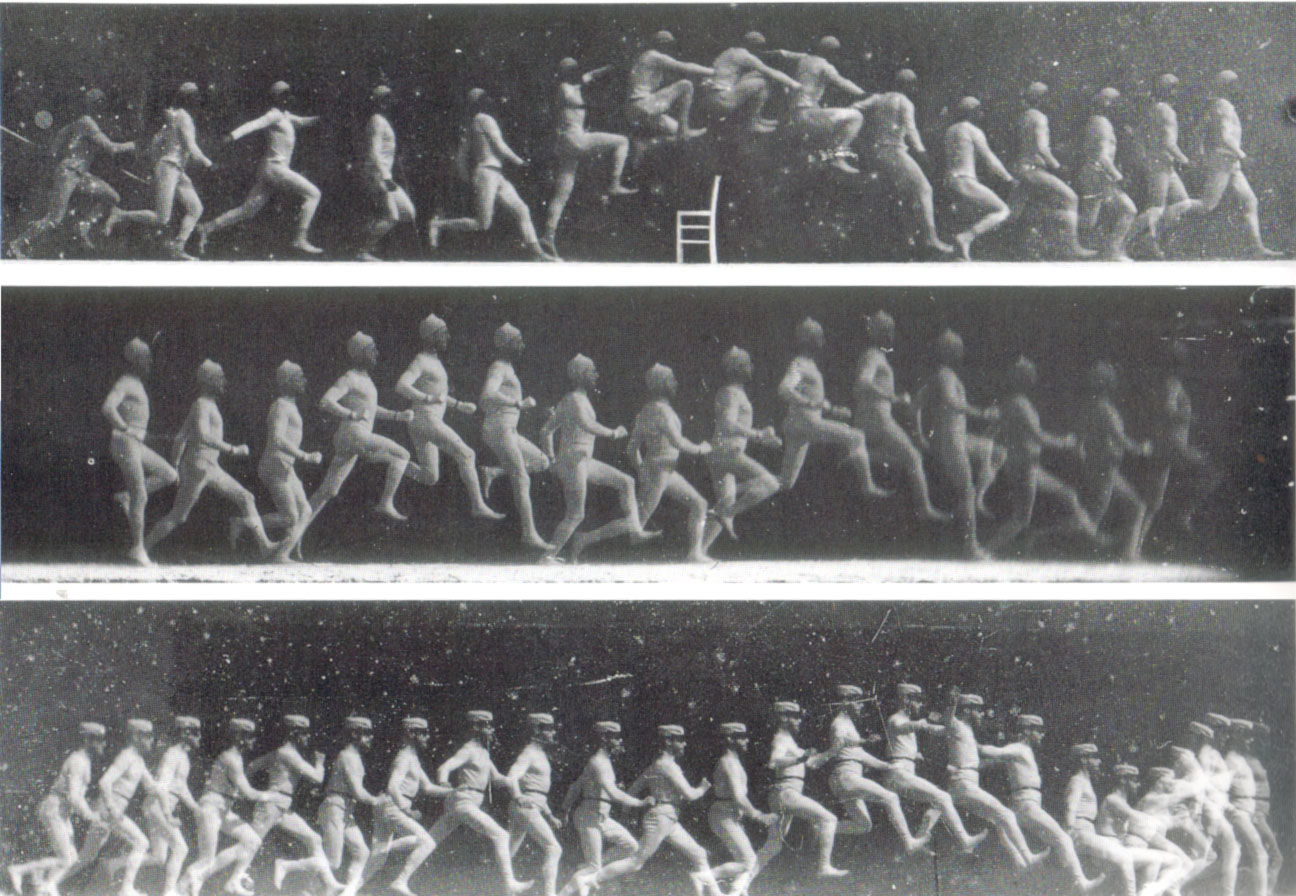
Etienne Marey was a French scientist working in the late nineteenth century, he was a pioneer of both cineam and photography. His work looks at human movement using photography to capture and display the actions. His photography was created using a specially created “gun”, which captured 12 frames a second, all exposed onto the same image, allowing him to study movement. Later he developed a cinematic technique which captured movement at 60 frames a second.
Marey’s technique allowed the analysis of movement through the use of imagery, we can things that the eye cannot and study them in detail through the use of his work. The images lie in field where art and science cross over, which is something that interests me throughout my work. While the images are not designed to be aesthetic in an artistic sense, there is something about them which draws our interest, perhaps in the graphical way in which realistic people and animals are presented.
Intemediatlity: Coming between two things in time, place, or character; intermediate.
Oxford Dictionary
Different medias can come together and cross over to form new media, or to show new things. Technology is causing this to happen more and more often, with new inventions and applications we can bring together these forms more easily. A simple example may be how sound recording and photography can be combined to create television; however, with the internet there are more and more ways in which media can communicate with each other. It should also be noted that it is not a new idea, ancient greek and biblical artwork also uses multiple medias to tell storys, for example, a church could use a stained glass window to support a narrative.
For the purpose of my own work I feel it is important to recognise, and understand how the different media interact with each other, and the effect that this can have on the interpretation of my work. It can also be said that taking something from context and representing it a new way through a new medium, something called ‘transmediafication’ which is generally related to storytelling and fanfiction, but could also relate to the relationship between a photograph and a video, especially when the relationship is blurred.
In the past decades “intermediality” has proved to be one of the most productive terms in the domain of humanities. Although the ideas regarding media connections may be traced back to the poetics of the Romantics or even further back in time, it was the accelerated multiplication of media themselves becoming our daily experience in the second half of the twentieth century that propelled the term to a wide attention in a great number of fields (communication and cultural studies, philosophy, theories of literature and music, art history, cinema studies, etc.) where it generated an impressive number of analyses and theoretical discussions.
David Claerbout is a Belgian artist who works with both photography and video, I am especially interested in the way which his work confronts the boundary between photography and video. He does this by exploiting cinematic projects of photographs, as well as photographic presentations of cinema, such as large format grids of video, used to moving narratives. He also presents his work in a large format, as projections in a white space, he wishes to make the museum experience different to that of the cinema.
Claerbout realises that the language of his work is cinematic, but feels the museum or gallery space is a way to represent this, giving the audience more freedom to move through his work, making it more personal and less controlled than sitting in a cinema. He tries to move away from the cinema experience by new ways of installing work. Firstly his work is installed in a white rather than dark black space, secondly it is projected onto walls rather than a screen and thirdly, more than one piece can be viewed at once. This makes the experience much different to watching a film. Another interesting technique is the use of transparent screens – this makes the work partly visible, but also fall off into the space, hitting the walls and people moving through the gallery, making the whole space become part of the work, rather than just the projections.
Claerbout also presents still image as a projcetion, blurring the line between the two formats, the photograph allows the viewer time to contemplate the image, while video progresses in a linear fashion, however, when the line is blurred like this can we define which catergory the work is truly in? Another way in which this is challenged is through the use of short, looped material, which can be defined as neither a still image, nor a cinematic film – which relys on narrative.
Damian Sutton discusses Claerbouts work, his analysis shows how an image can collapse time, as well as how the different medias can work together as described by the intermediality lecure I studied earlier, and how new technologies allow this more readily;
In Claerbout’s video overlays, the “superimposed time codes”
emphasize the gap that we appreciate between past and future, but it
takes Claerbout rending them apart to reveal how photography naturally
crashes past and future together. New technologies always have
the capacity to reveal the unspoken characteristics of old ones.
Gerhard Richter is a German artist and most prominently a painter, while he has also produced photorealistic paintings, and photographs which appear painterly or have been altered with paint. Again, this is an artist whose work links to the intermediatlity concept running through my work currently.
Richter’s photographic work relies on it’s technique to demostrate an improvised “blur”. Firstly the artist takes a photograph of his subject, he then projects this image onto his canvas and traces it for a painting. After the image has been painted, a squeegee is used to drag the wet paint across the surface of the image, ‘blurring’ the result. While this may have underlying concepts of identity I am more interested in the crossover between the two artforms, and the way in which a false perception of movement is produced.
Sometimes the effect is subtle, while in other images it becomes much more abstract and noticable. In these more abstract works we are forced to view a realistic photographic work of a city or other landscape as a series of smears and lines, with a large pallet of colours similar to that presented in the original image. While it may not be a direct copy of the original, neither was the photograph which the painting was based on, it was merely a copy, and in these pieces, we see a copy of the copy produced and manipulated, questioning the originals reality and our perception of the space.
John Hilliard is an English artist who uses photography in his work, which mostly challenges the concept of photography itself. He does this by exploiting things which are specific to the medium such as shutter speed and exposure in order to challenge its truth. By creating multiple versions of the same image, Hilliard proves that photography must be subjective, not objective, as it’s process is defined by controls which, when changed, result in variations in the image which would not allow for a single, ‘true’ version of the photograph.
I am interested in Hilliard’s work because of his work related to time, showing that the camera is not able to present us with, as many describe “an instant” but a discrete measurable moment.
In this image we see how the state of water cannot be objectively defined with the use of the camera. By using two different shutter speeds the camera is capable of rendering the water in two different ways, this leads us to question which one, if either, is the more accurate representation. The image also shows us the technical capabilities of the camera, and its possible applications in relation to time and movement.
Dryden Goodwin is an English artist, mostly known for his series of portraits overlaying drawing with photography. Here I have selected one of his lesser known works, which formed part of a 1999 exhibition at the Site Gallery, Traffic. The piece presents us with a series of film stills, displayed as small transparencies on a light box. The piece builds up its power through the repetition of the cars, through the number used, almost referencing a typology, the work is built up. The way in which the moving image becomes the still, yet still, through its presentation references the cinema again, in a loop of moving/still. This is then repeated in the subject matter, which presents us with a moving subject, frozen still in each frame.
Cinemagraphs are still photographs in which a minor and repeated movement occurs. Cinemagraphs, which are usually published in an animated GIF format, can give the illusion that the viewer is watching a video
Wikipedia
Here are some examples;
As seen in the images, still and moving images are combined to make a short loop which contains elements of both. These can be used to either disturb or surprise the viewer, as movement is not expected. The unique look of the cinemagraph is interesting and something we do not see very often – it is yet another example of how technology can help us combine media.
Sutton discusses photographs as a “time-image” (pxi) which record the image of any given moment. This is in direct opposition to video, where time is displayed to us through the frame rate of the video. Immediately I can think of images which might not display any representation of time – even if time was a process in there creation. I also draw my mind to non-narrative video and non-linear narratives, projected still images, cinemagraphs. While there are exceptions to the rule, its general theory is one which is easy to understand – a photographic frame displays a fixed point in time, while video is constantly pushing forward in time, forcing the viewer onwards as they have no control over its motion. Both are associated with time, “the cinema with time in passing, the photograph with the lost moment.” (p4)
Digital film is criticised for being a polariser of opinion in photography and cinema. It served to generate two opinions. One that it disrupted photography’s unique relationship to reality, and the other that it was “a real revolution” (p3)
Sutton suggests that we still hang onto the “legacy” of “the decisive moment” (p7) even with the use of modern technology; however, what is more relevant is the “event.” (p10) We notice the event not by what it is, but its effect, it may be positive or negative, but if we do not notice an effect from it, we do not register its significance. By creating an image, we convert the truth into a single image which may represent the truth – it is this image which writes the history of the event and then causes us to remember it as the event, rather than the truth it represented.
As I am looking into using new, or at least unfamiliar technology it is interesting to see what Sutton says about its uptake. He discusses that it will rely on an aesthetic rather than the technology (p27) and that this aesthetic will be derived from the language of existing technologies. In creating a technologically advanced image it is important to not forget the codes and conventions which currently surround images, whether these are accepted or not by the author, they exist and are a part of the reading of our work.
“The photograph’s poverty in representing time is demonstrated through its apparent need to be attached to other frames in the filmstrip,” (p234)
Bergson’s text explores time, duration and our concept of free will. He is interested in our senses and sensations, and how we perceive these. Here is an outline of his thinking which I found effective;
“Look closely at a sheet of paper lighted e.g. by four candles, and put out in
succession one, two, three of them. You say that the surface remains white
and that its brightness diminishes. But you are aware that one candle has
just been put out ; or, if you do not know it, you have often observed a
similar change in the appearance of a white surface when the illumination
was diminished. Put aside what you remember of your past experiences and
what you are accustomed to say of the present ones ; you will find that what
you really perceive is not a diminished illumination of the white surface, it
is a layer o f shadow passing over this surface at the moment the candle is
extinguished. This shadow is a reality to your consciousness, like the light
itself. If you call the first surface in all its brilliancy white, you will have to
give another name to what you now see, for it is a different thing : it is, if
we may say so, a new shade of white. We have grown accustomed, through
the combined influence of our past experience and of physical theories, to
regard black as the absence, or at least as the minimum, of luminous
sensation, and the successive shades of grey as decreasing intensities of white light
But, in point of fact, black has just as much reality for our consciousness as
white, and the decreasing intensities of white light illuminating a given
surface would appear to an unprejudiced consciousness as so many different
shades, not unlike the various colours of the spectrum. This is the reason
why the change in the sensation is not continuous, as it is in the external
cause, and why the light can increase or decrease for a certain period
without producing any apparent change in the illumination of our white
surface the illumination will not appear to change until the increase or
decrease of the external light is sufficient to produce a new quality.” (p53-54)
We are aware of our surroundings, and our perceptions, but we do not always analyse them this closely. Our senses are mostly subconscious, we feel without thinking, as we perceive light and shade without having to consider them. We can understand the effects of light and dark on our surroundings. This is very interesting, as this is a physical limitation of the camera, which cannot define light from dark in its pursuit of middle gray. A white object can be placed in a very bright and a very dark room, and the machine will render contrasting tones, far from it’s ideal perspective of truth.
Duration, helps us to understand the same object in both spaces, while the camera can only represent one discrete interval in time, with no understanding of the previous event from which we can inform ourselves. Bergson describes our world in terms of space and time. When we count objects, we count them in space, ten objects are ten physical objects taking up ten discrete portions of space. We count them as they occupy the space. Without objects to count we think of numbers abstractly, and count 1,2,3,4 in time, not space, because we have no fixed object on which the number can grasp.
What leads to misunderstanding on this point seems to be
the habit we have fallen into of counting in time rather than in space. In
order to imagine the number 50, for example, we repeat all the numbers
starting from unity, and when we have arrived at the fiftieth, we believe we
have built up the number in duration and in duration only. And there is no
doubt that in this way we have counted moments of duration rather than
points in space ; but the question is whether we nave not counted the
moments of duration by means of points in space. It is certainly possible to
perceive in time, and in time
only, a succession which is nothing but a succession, but not an
addition, i.e. a succession which culminates in a sum. (p78-79)
Bergson goes on to give a more abstract, yet convincing argument, if we count sounds, we count them in space, not duration. He proves this by saying that to count them we count the individual sounds, separating them from each other and the gaps between them, by doing this, we separate the sounds from the space, effectively we are counting the space. Time, is therefore somehow linked to space, and is different from the concept of duration, which does not rely on space to be described. (p91)
Pure duration, that
which consciousness perceives, must thus be reckoned among the so-called
intensive magnitudes, if intensities can be called magnitudes : strictly
speaking, however, it is not a quantity, and as soon as we try to measure it,
we unwittingly replace it by space.
But we find it extraordinarily difficult to think of duration in its original
purity ; this is due,
no doubt, to the fact that we do not endure alone, external objects, it
seems, endure as we do, and time, regarded from this point of view, has
every appearance of a homogeneous medium. Not only do the moments of
this duration seem to be external to one another, like bodies in space, but the
movement perceived by our senses is the, so to speak, palpable sign of a
homogeneous and measurable duration. Nay more, time enters into the
formulae of mechanics, into the calculations of the astronomer, and even of
the physicist, under the form of a quantity. We measure the velocity of a
movement, implying that time itself is a magnitude. Indeed, the analysis
which we have just attempted requires to be completed, for if duration
properly so-called cannot be measured, what is it that is measured by the
oscillations of the pendulum ? (p106-107)
“The most fundamental unit of time-measurement is in most societies the period of the earth’s rotation on its axis, which is normally known as the day.” (p1) However, the perception of time and its discussion in language varies across different societies, and the way in which we explain it may change. The most common way in which we describe the passing of the Earth’s rotation in English is as a day, however, we still use the ” word ‘fortnight’, meaning 14 nights” (p1) which we take from Celtic and Germanic cultures.
We record time, through the progression of the sun. We use it to measure our ‘day’ and its absence measures our ‘night’. We can then use its position in the sky to determine the time, as well as the season. Going beyond this days and nights and seasons can be divided into some form of calendar, both the one we are familiar with, as well as more ancient ones, such as that of the Egyptians, which divided a day into 12 hours of light, and 12 hours of darkness, and grouped days into 36 Decans (groups of ten days) which formed the basis of the year. While this may not seem critically relevant to my study of time, it is highly important to know that all our measures of time are based on the Sun (or the Earth’s rotation). The sun and the stars could be an interesting subject matter, or just clarify what it is we talk about when we examine ‘time’.
Because the Earth’s orbit is elliptical and it is inclined in its orbit, it is sometimes closer, or further from the sun, creating different seasons and the equinox. This results in differences between the hours of a day which the sun shows us, and that which we experience on clocks. (p9) This difference could be played upon or investigated through imagery, as it is the basis for what we refer to as the ‘shortest day’ which in fact is not based on just the amount of hours the sun is in the sky, but, according to a sundial, that day is in-fact half an hour shorter than on the longest day. (p9)
GMT was devised in order to synchronise time across Britain. It was important particularly to the railways and the communications industry. As time is perceived differently from different points of the Earth, a standard was required as relying only on the sun it is likely “that a telegraph message transmitted from east to west should appear to arrive before it had been sent.”(p11)
In Wells’ book I have looked at an essay by Peter Wollen, in which he describes film and photography as “fire and ice” (p76) the fire is constantly flickering and moving, while the ice is frozen still. Time dominates the way in which we view photographs, as we view camera’s as “devices for stopping time”. (p76) In a still image we can capture a single moment and display it back in another place and time, as the camera saw it while the shutter was opened. To the reader, time appears stopped. Film however differs in comparison; we read film as a number of still frames played back at a fixed rate, this gives us “the illusion of movement” (p76). In film the action does not move, only the still frames which are played back to us, traditionally in cinema at 24fps, even if we look at highly advanced modern techniques, there is still a number of fixed frames, which will be played back at a fixed rate of time, to simulate movement. We become absorbed in this illusion, when the camera moves through a jungle, we feel that we are moving with it, however we are not moving, and neither is the screen which we watch. This level of absorption is something the single image cannot demand as easily as film, the dimensions of time and space “place the spectator within.. a narrative.” (p80)
In a photograph conversely, the viewer becomes the champion of time, this is a theory of Barthes’ which keeps coming up. It is highly significant that the reader of a photograph has much more control of the reading than the reader of film, where time forces us onward in a linear fashion. While we can hold onto the moment of a photograph, in film each moment passes and is irretrievable in under normal viewing. We have the chance to re-evaluate the photography, while with film we must view what is presented, in the timeframe of the presentation.
A film will often follow a narrative, as it takes us through its representation of time, photographs however, “cannot be seen as narratives themselves, but elements of narrative”. (p78) By combining photographs or using other media to support them we can suggest or build a narrative, but we cannot create one which is true or complete. While it is suggested that film is somehow more advanced in this way, I contest this. Film is no more than a collection of photographs, accompanied by sound, it is a construct of a narrative. In theatre, the narrative is constructed by actors, directors and scripts, filming this to display as cinema is a construct of a construct, the narrative itself cannot exist in a pure form when it is recorded in this way. The experience of watching a performance, compared to watching a recording of the same performance in a cinema is noticeably different, and the camera’s intervention in space and time play a part in this, whether or not we realise it.
“There is no such thing as an instantaneous photograph.”(p101) A photograph represents the time the shutter was open, however short or long this time, it is a measurable amount of time. Photographs exist in the present, show us the past and can be viewed in the future. Older images were limited by technology, so the passage of time was more obvious with blur of movement. Some artists are effected by this accidentally, while others deliberately manipulate it. Photography allows us not to stop time, but examine small slices of it, which are invisible to the naked eye. There is “a beauty in this fragmenting of time” which shows us a “momentary patterning of lines and shapes which has previously been concealed within the flux of movement.” (p102)
Krauss revisits Benjamin’s theory of the ‘optical unconscious’ and its importance to modernism, I feel this text is useful to my work as it deals with the eye of the camera and medium specificity. Benjamin’s work appears in most of the texts I have studied with reference to time and duration. Krauss looks at Benjamin from a new angle and scrutinises his theory in terms of psycho-analysis.
Where this particular text really interests me is its look on art and artists who diverged from reality into fantasy and compulsion, which may be more akin to the sort of imagery I am dealing with, looking in a way we are not familiar with.
“To see so fast that the blur of that white smudge could be exploded into pure contact, pure simultaneity, pure optical pattern: vision in touch with its own resources.” (p7)
Krauss is comparing the modernist painting of Frank Stella and Clement Greenberg to the act of hitting a baseball, vision is key to our connectivity with the world and our physicality.
Krauss explores the way we see and paint landscapes, the sea and the sky are a mechanism for showing all that we can see, while some may challenge this idea, it is interesting to see that she is actually referring to the abstract painting of Mondrian and the Great War. (p12) However, Krauss makes clear that this view of the world “as a totalized image” is created by a “frame of exclusions” and “is the work of ideological construct.” (p12) Whether abstract or realist, images are constructed in a certain way, while we may perceive them to show us all that exists, the reality is that they do not, and cannot.
The camera is the “surgeon’s knife that can operate dispassionately on the human body”. (p179) Seeing “in fragments” somehow it reaches a greater reality that our own vision. The camera, may see what we cannot, but it still lacks the power to present us with everything. If the photograph cannot see everything, is it not our imagination which sees or does not see – just as the frame can cause us to see differently so can time. Krauss argues this point, explaining that while technology allows us to closely examine the world, it does not mean the world has an unconscious in the same way as Freud suggests we do. I feel Krauss is somewhat overstating this point through her text, what is unconscious to Freud and Benjamin is different, and what Benjamin describes as the optical unconscious is what is hidden from the naked eye.
This film was made in 1982 by Godfrey Reggio. It is made up of slow motion video and time lapse clips of various landscapes, moving into the city and examining its movement. Yet again, this is a piece which contrasts the still and moving image in order to get us to re-evaluate time. Especially relevant in this video is our use of technology and it’s advancement in time, with us moving away from nature as technolgy gains momentum. The video excludes narrative or spoken words, using only images and music to convey its message, perhaps a symbol of the limitations of our language. The video shows us the way in which we have advanced, without directly telling us through language. Rather than showing us the effect technology has on us, the director shows us technology itself, without people, to show us the power it has over our whole world. The cars reference our own movement, while the way the city is presented references the way in which silicon chips look. The author did not want to load the title with preconceptions, so titled the image with a word which had no cultural meaning, as he felt language was too limited to describe the meaning of the film. The actual title means out of “A way of life which is in turmoil”.
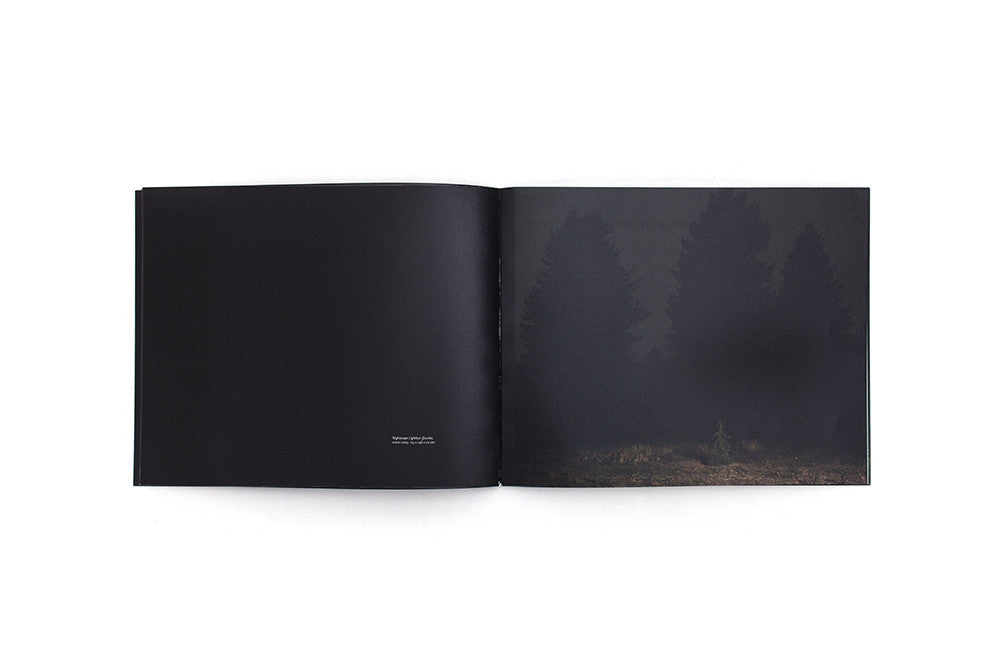
Paul Gorman is an upcoming British photographer who recently graduated from Bournemouth University. Since graduating Gorman has featured in a number of group shows around the country and his work is beginning to gain momentum. His work explores space and time through the use of multiple exposures, which enables him to view an object or scene from more than one perspective at the same time, at different times, in one image. This is somewhat similar to cubism, which attempted to represent three-dimensional space in paintings.
In the above image for example, we see both a long and a wide shot of the same (presumably) trees, allowing us to see two different viewpoints at one time. Rather than us reading this however as two seperate images, we see the new image as a whole, the two views merging into one single piece which becomes a new form of time and space which is only visible through the use of the camera.
This is relevant to my own work because of its use of time and space. It is interesting to see time collapsed down into a single still frame in this way, while the camera’s fixed perspective is denied as multiple ways of looking are composed on top of each other.
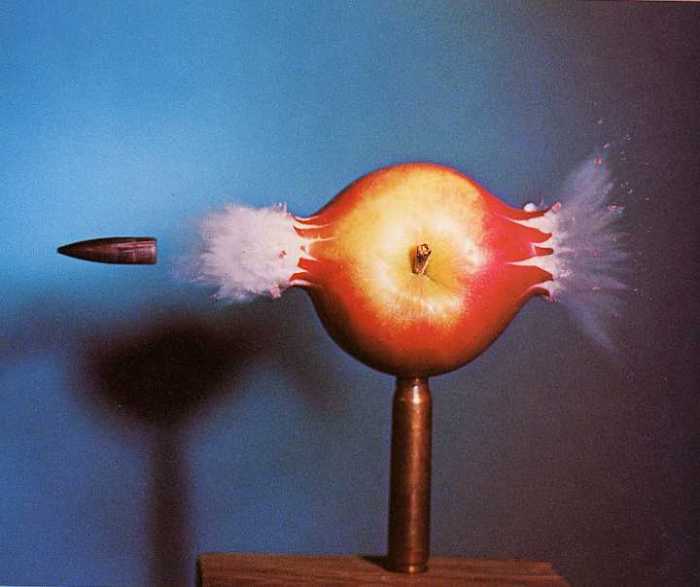
Dr. Edgerton worked as both an artist and a scientist, looking at ways in which the camera could freeze motion, much like Muybridge and Marey before him. There are several strands to his work, including studies of movement, high speed images and military work for the US governments nuclear weapons program. His work centers around the use of flash photography using an electric arc to create a momentary flash much shorter than conventional flashes of the time and even today. This is an example of technology enabling a particular way of seeing – without the stroboscope, even the camera could not see these images.
This example shows how a fast movement can be captured, this image uses an effective shutter speed of around 1/1,000,000 second, much faster than a regular camera’s maximum 1/1000 or a modern flash’s 1/20,000. When working with such high speeds we have to question everything we know about photography’s ability to freeze time, what we see as time, even in the fastest conventional images, is slow by a huge degree when compared to Edgertons’ imagery. If such a process existed that could show us time more finely than even Edgerton, and demonstrate the differences in the world that exist at these speeds, would we be able to appreciate time in the same way? From this we can explain that time is NOT a series of discreet events as we see in film and photography, but actually an infinitely moving and linear concept which cannot be described as a single moment, because the moment itself can be infinitely small.
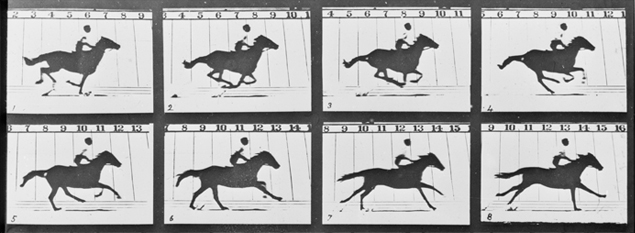
Muybridge was an English photographer whose work was pioneering in the field of movement.
His work studied the movement of people and animals, going as far as to reconstruct this movement in a device which he called the zooproxiscope, which projected still images from a spinning glass disc to create an illusion of movement. What is interesting is how aware the early practioners were that thier constructs of movement were just that, constructs or recreations, rather than the actual movement itself. The images and the accompanying projections are not just artistic work, but also scientifically show the movement of various species, and area which could not be studied without the equipment used by Muybridge. Particulary of interest to me is the way moving animal is processed into still images, which are assembled into something resembling a circular filmstrip or loop, which then presents us with moving images once again.
Tacita Dean is a British artist who works primarily with film. She sees film as an important medium in the way it has a tangability and interaction with time. Her work questions the act of looking, and whether there is honesty in what we can see. She works on her projects by learning from her results and developing what she sees in the work. Her work is very still, showing slow, delicate movements and very graphic views. The sea and seascapes feature heavily in her work, as a vast expanse of space which confronts the viewer in an epic way.
This text explores vision, and how we see the world around us, very relevant to my studies, as my techniques disengage us with familiar ways of seeing for ones are “severed from a human observer.” (p1) These images do not refer to the way in which we, as humans see, what they refer to is “millions of bits of electronic mathematical data.” (p2)
Optical devices changed our perceptions of observation, even simple technologies have been used to modify and adapt our vision, as they have become more commonplace we have become accustomed to them. This can be seen through art history with the use of the camera lucida and the camera obscura in painting to obtain technically correct perspectives. After which “the camera obscura evolves into the photographic camera” (p26) capable of recording scenes more quickly and more accurately than an artist. This means of image generation was grounded in realism, only what was before the camera could be reproduced, leading to the rise of abstraction as a means of escape.
The use of the camera limits us to one viewpoint, somehow giving this authority, the possession of the technology allows us to think of it as truth. Our “sensory experience is supplanted by the relations between a mechanical apparatus and a pre-given world of objective truth.” (p39-40) Alluding the senses may allow us to see more objectively, but can our perception be recreated with machines, without human interaction? Is there any greater truth in the view of the machine, or just one which differs from our own vision?
Crary notes that vision is formed by several factors, which we can represent and describe. In particular he notes that cognition may be “measurable in terms of duration and intensity,” (p101) making it recordable and reproducible. In a way, this is more relevant today than it was to the camera obscura and the photograph. As digital technologies improve, so do the methods we have to record what we see, and beyond what we see, presenting the information back in a familiar, understandable medium.
Andrew Davidhazy is an academic who works at RIT in the US. He has written a lot abou the mechanics of both strip photography used in finishing line imagery as well as slit scan images caused by slowly exposed slits panning the image plane. I have read his texts for technical information, although I don’t see the need to repeat them here. Below is on of his personal images as well as links to his texts online. Strip photography Slit-scan Photography
I have chosen to look at this image, not because of the artist, but the way in which it exhibits focal plane distortion, a related topic to slit scan photography. Because the shutter of the camera moved at a high speed, it was beginning to close before it was fully open, as it moved across the image the car moved past the camera, causing it to lean, while it was panned to follow the car (albeit more slowly than the car was moving) causing the crowd to lean in the opposite direction. Notice that the wheels are not recorded as circular, but ovals, due to them moving as the focal plane moves upwards.
In his video The fourth dimension Rybczynski uses a rolling shutter effect, similar to slit-scan photography, to alter our perception of time and space. In the video objects are warped and twisted, often around the actors, in a way not perceivable in the world we perceive. The story plays on the theme of entwinement, relationships and narrative, opening and closing with a book twisting, pages open. The “fourth dimension” is obviously time, which is manipulated in a way we can easily see – space, the video shows how time looks, or at least one way time can be looked at.
Daniel Crooks is an artist who works with the slit scan technique. He uses it to distort and alter what we see in the real world with some good results, which he presents as series of videos, accompanied by stills.
In this video, crooks uses his technique to create the illusion that the waves are flowing across the beach rather than towards us. This is an interesting effect which works aesthetically, however I am unsure of the motivation behind the piece. There is also noticeable distortion where the effect has taken place on low resolution footage, leaving a visible trace of where the video was edited, I doubt this was intended although it could be said to show evidence of the technique, almost like a painters brush strokes.
This example is much cleaner and more polished, the object is most likely flowers but it could be many things. Turning the object on a turntable, Crooks keeps us from ever seeing what it looks like, using time to paint a new object entirely. The movement is very subtle, making it appear almost like a still. The slowness and silence of the video, along with the lack of colour, make it much more contemplative than the other work, however, as an abstract piece I see it as not much other than form and tone, as there is not subtext given to the work or any signifiers within it.
Mittelstaedt uses slitscan photography to record a trace of his subject, when she moves her movement is recorded as a series of lines travelling across the image, a ghosting of her movement. This piece is quite effective visually, with good technical qualities and the movement and its recording become quite striking. The video is about the human body and its form, especially the way in which form can change, alter and move. The technique is used quite litterally to explore the movement of the body, much like the historic artists I have looked at, Mittelstaedt is recording movement itself in order to present us with a trace of where the body once was, this is refelected in the title, Unfolding as the movement of the model “unfolds” into a new form of the slitscan, where her body is warped into two dimensions, as if her skin has been unwrapped and presented as a flat object.
In Mobile Brush Lam experiments with technology to “draw” an image from a video input. He explains how his softwares funciton in his video, which he says is a mobile phone application. Lam seems more interested in the interaction of the medium of technology and the world than the imagery itself. The use of technology is something which is key to my works production, but I do not know yet whether I consider it to be a mere tool, or an vital part of the work itself.
http://www.youtube.com/watch?v=8PR1kjhzANQ
Knapek creates imagery based on time, which he has been delveloping for some time. It is vaguely based on slit-scan photography, although he writes as though he is unaware of the technique. His basic work comprises of time lapse images shown as one single image, allowing us to see multiple moments in time, all in one instant.
In his early work, we see a few hours presented as one image, we see the sun and moon streak across the sky. The difference between this type of image and a slow shutter speed is that everything is exposed correctly and rendered sharply across the frame, rather than being blurred and having extremities of light and dark. What is most interesting is the movement of the sun.
When he developed his technique further, Knapek was able to produce an image of an entire 24 hours, from midnight to midnight, showing a transition from night to day in a single frame. It is strange how there is little twilight shown to us. Conceptually the work begins to be underpinned by titles, such as “Second shortest day” showing that the work is about time and the sun, rather than merely an interesting technique.
This piece documents a train journey, each veritcle line is from a different photograph, which is compressed horizontally to allow us to view all the images in a smaller, panoramic space. The image becomes a trace of the journey, an image of space and time, and how the artist travelled through it.
Finally I wanted to look at this piece of work, which isn’t actually photographic, instead it is a technological trace of the sun. Each dot is representative of the strenght of the sun at a certain time and date, with dates horizontally and time vertically. It is interesting to see how Knapek’s work has developed from his early experiments into this, quite advanced, and technically driven, trace of the Sun.
Woodman was a young photographer, artist and student, who made most of her work in the 1970’s before her suicide at the age of 22. I wanted to look at her work because of the way in which she takes advantage of the camera and its recording method.
The slow shutter allows the artist to blur her subjects together, merging and amalgamting them together. Young girls (usually Woodman herself) morph into the decaying architecture, becoming part of it, fading away into brick and peeling wallpaper. In this particular image Woodman has been very succesful in getting the image balanced, it is aesthetically a strong image, with a deep and dark background to it. The image can be seen as a metaphor for the darkness of adolescence and the worries of teenage life – which eventually resulted in Woodman’s own death. It is also a reminder of mortality, as the building decays, so does the young female model, she is not able to escape the effects of time.
http://vimeo.com/42460300
I looked into La Jetee because it succeeds in creating a film almost entirely from stills. There is also narration added to the film which was obviously not part of the original recording. This meeting of mediums appears seemless, with the audience not jarred or disorientated by its format, instead they become enveloped in the narrative, which is an interesting story concerning time travel, memory and death. The narrator is trapped in his own dreams, forever seeking something, but his memory fails him every time he reaches towards it, only at the end of the film do we realise the event is his own death. The film could be read as a message not to seek in life, as it is futile, death will always catch up with us. By using the stills rather than traditional video, the message of the film is read somewhat more seriously, and becomes more effective, yet just as engrossing as film.
Carter is an English photographer and artist whose work is centered around the concept of painting with light. He often creates very graphic imagery, yet through photographic means. He achieves his images using a special camera which has a swing lens – normally used to create a panorama. By swinging this lens across the image while simultaneously swinging the camera in the opposite direction streaks can be made to appear in the image, and details stretched. His images show how the camera can be used, quite simply, to distort our world rather than recreate it realistically. This also shows the failure of the camera as an instrument of objectivity – these images all fail to reproduce what our eyes see.
Each image is a one off produced on 120 film with a widelux camera, rather than digital image manipulation, this adds value to the image both conceptually and in monetry value – they are not easy to produce and there is an element of chance and certainly failure. The images are a direct record of the technology (the camera) and the user (the photographer) interacting to record the subject and thus are a trace of the movement of both during the duration of the exposure.
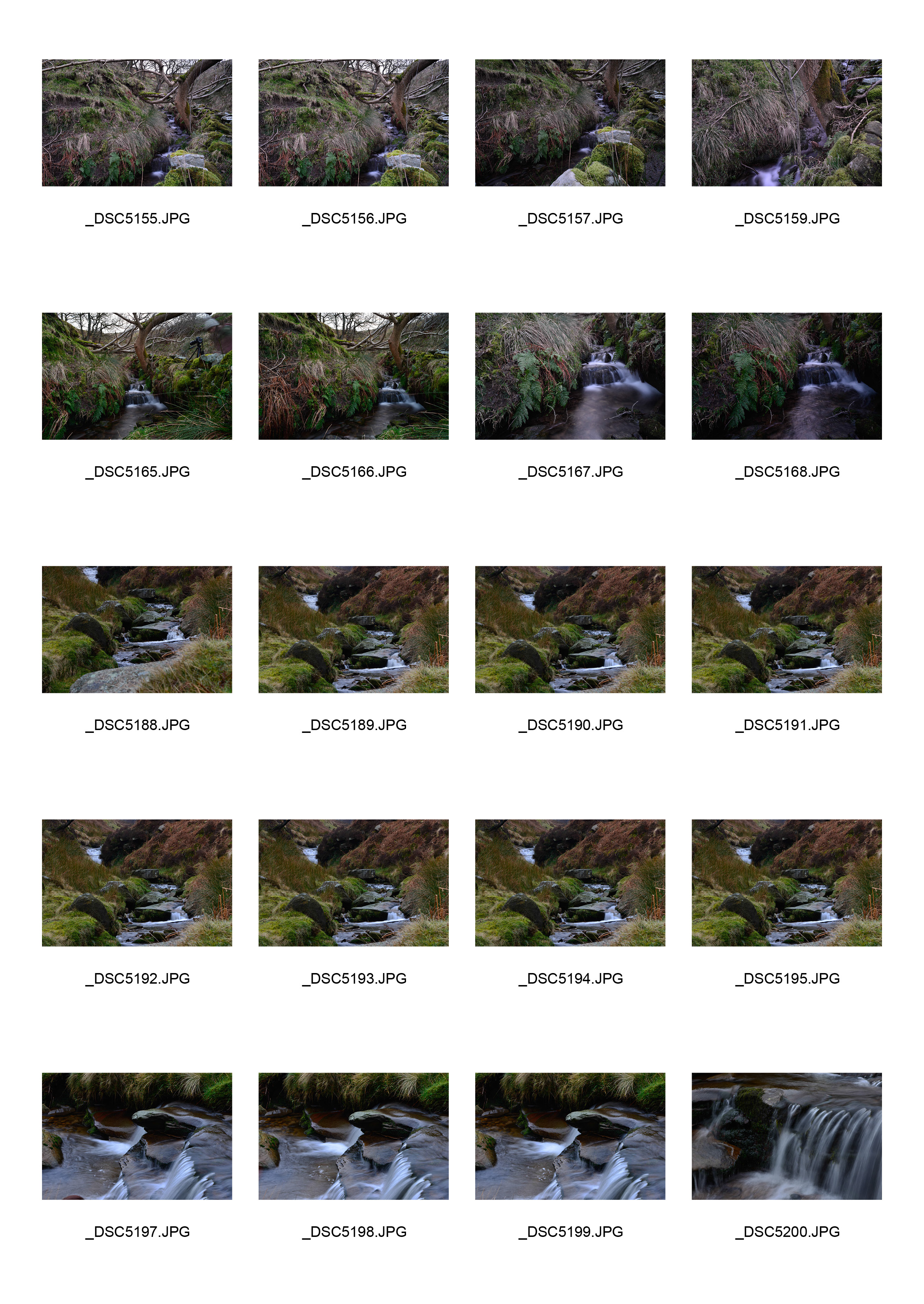
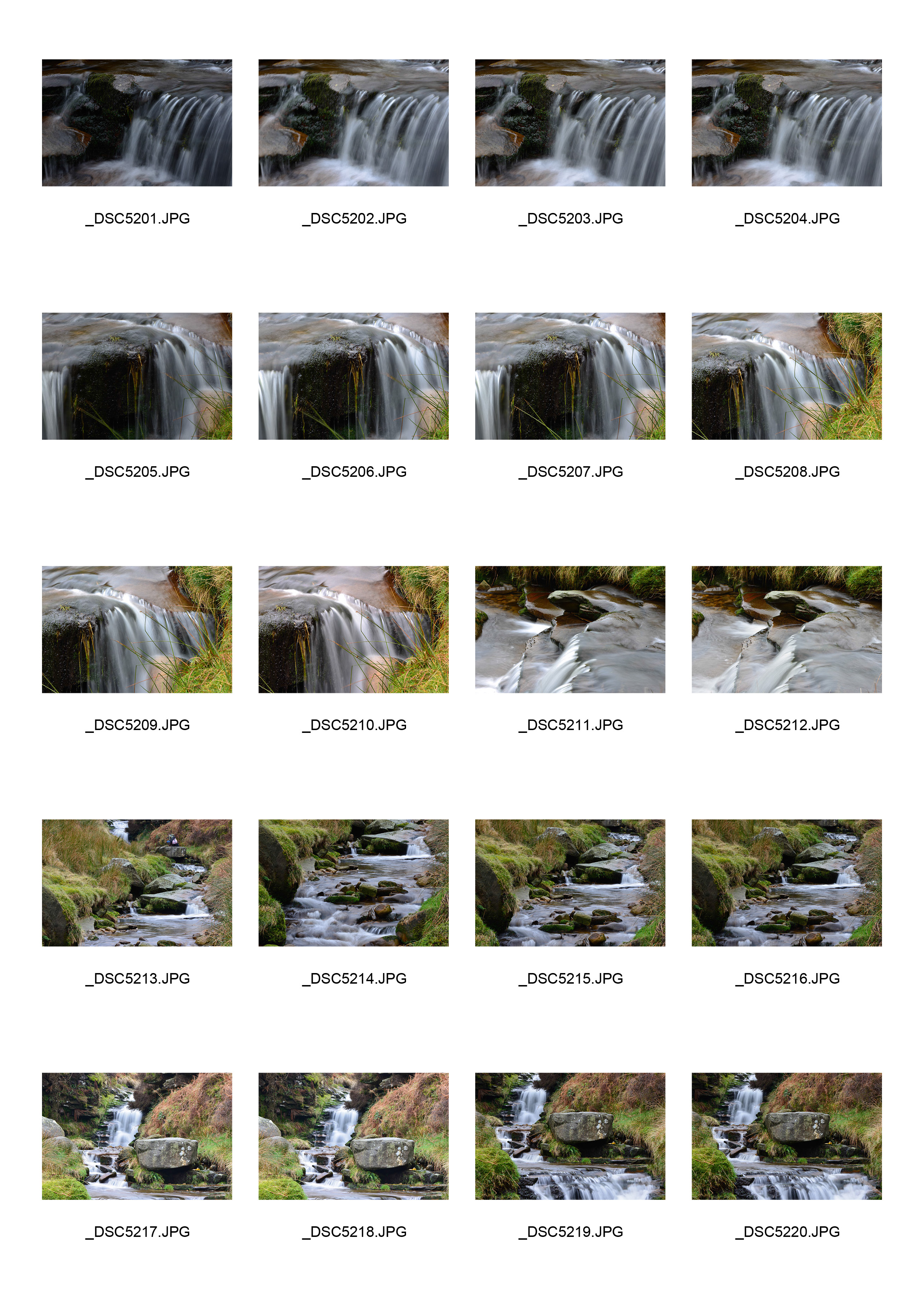
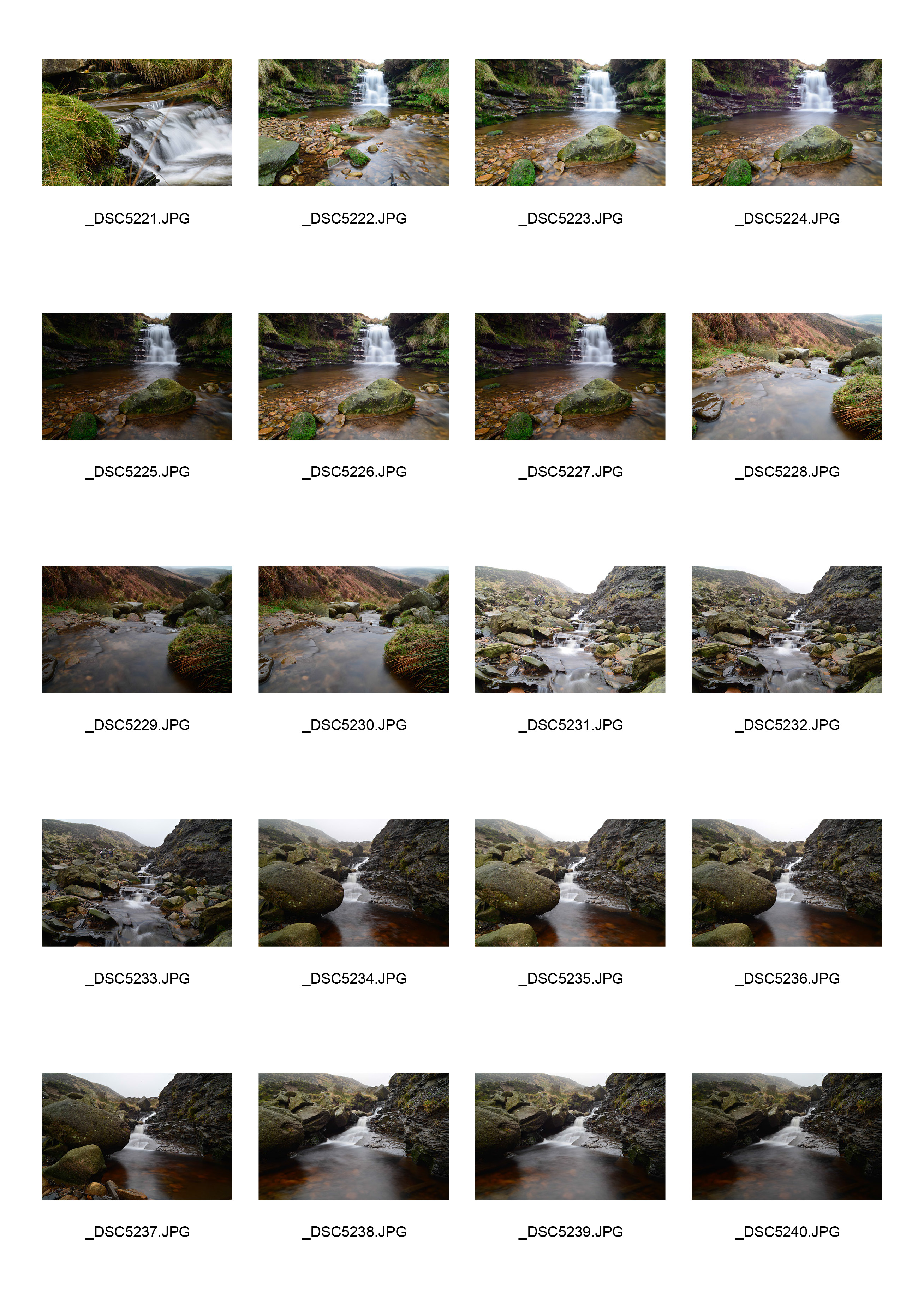
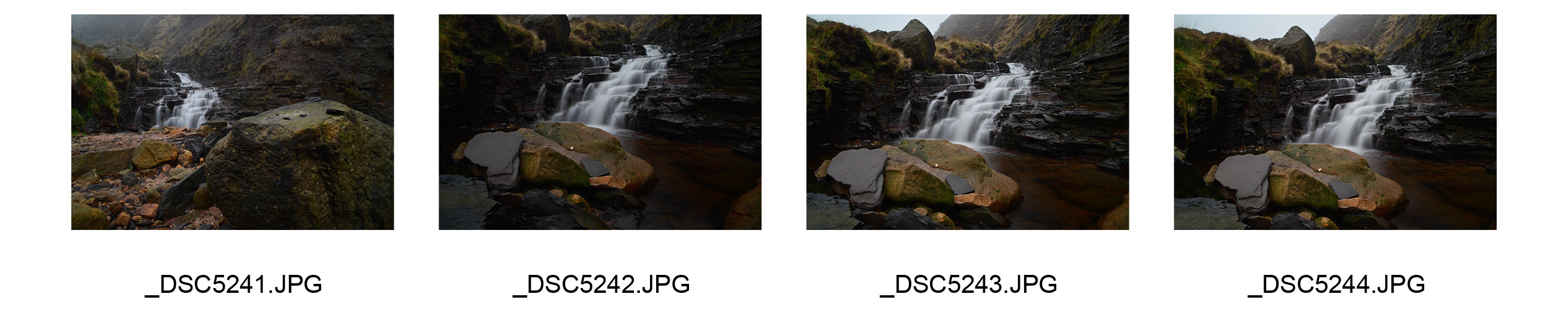
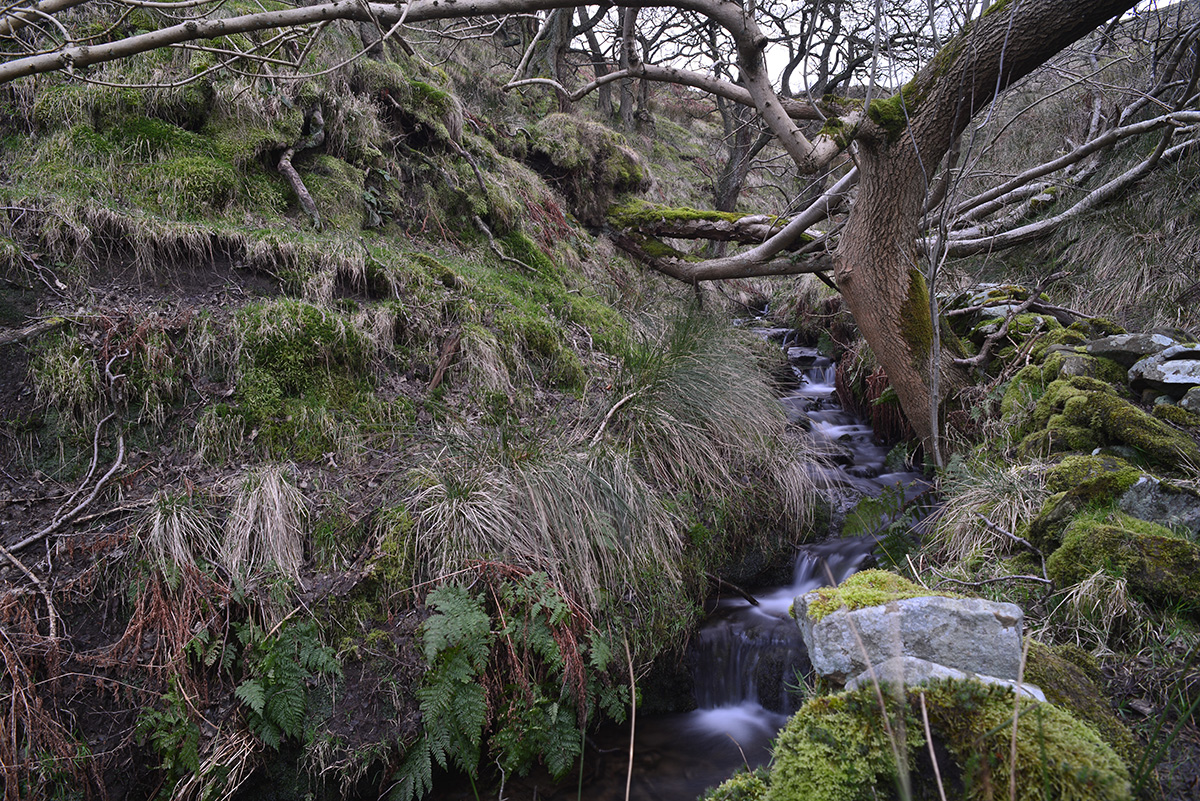
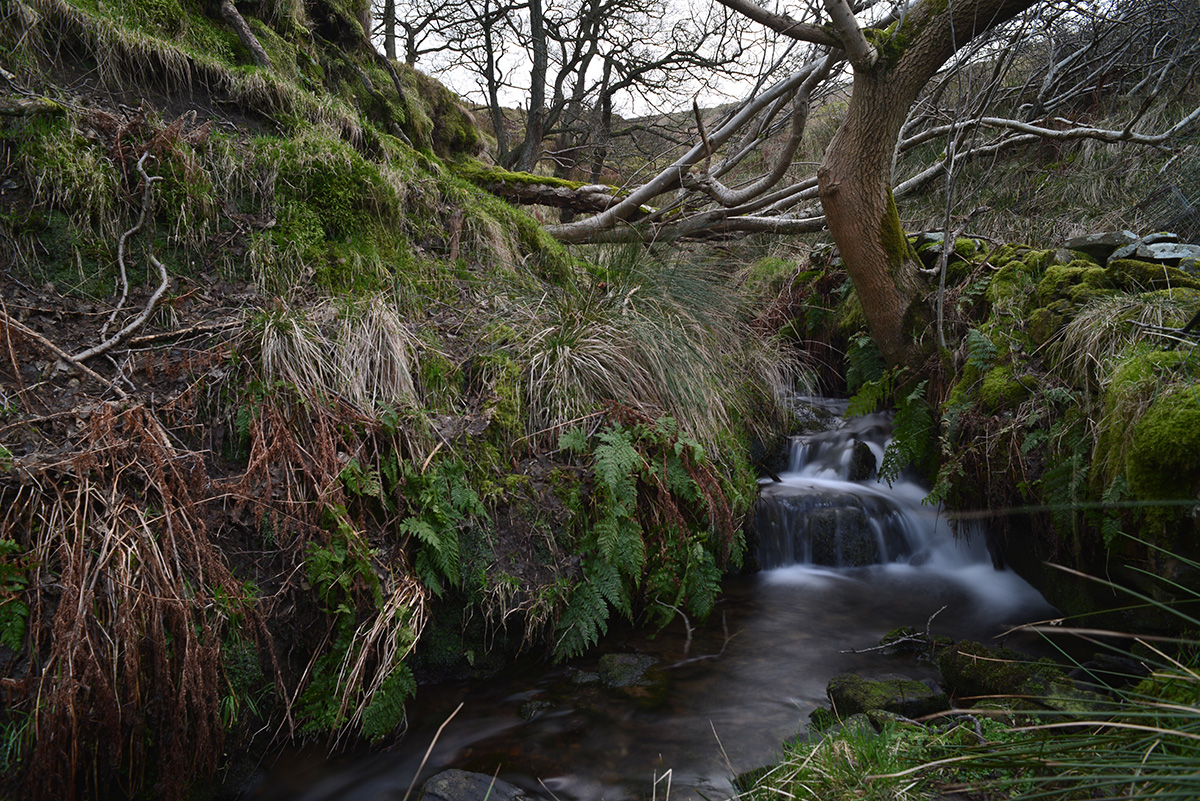
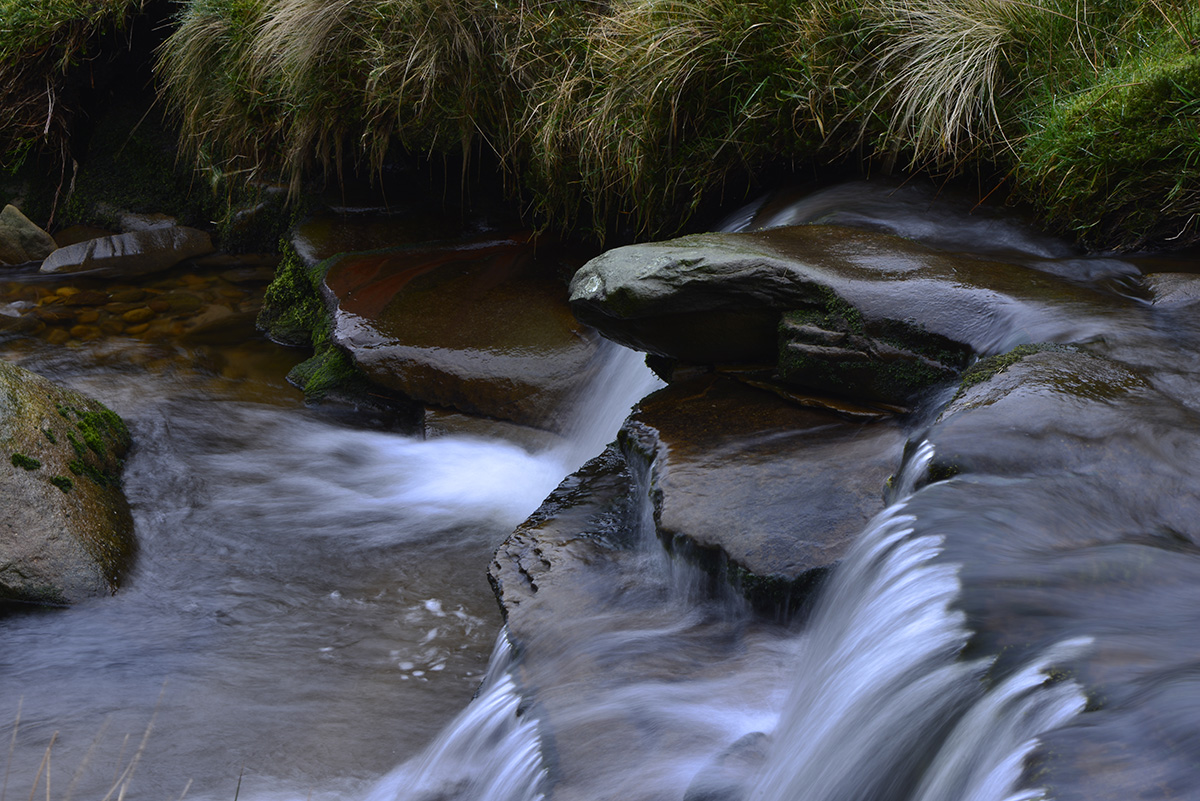
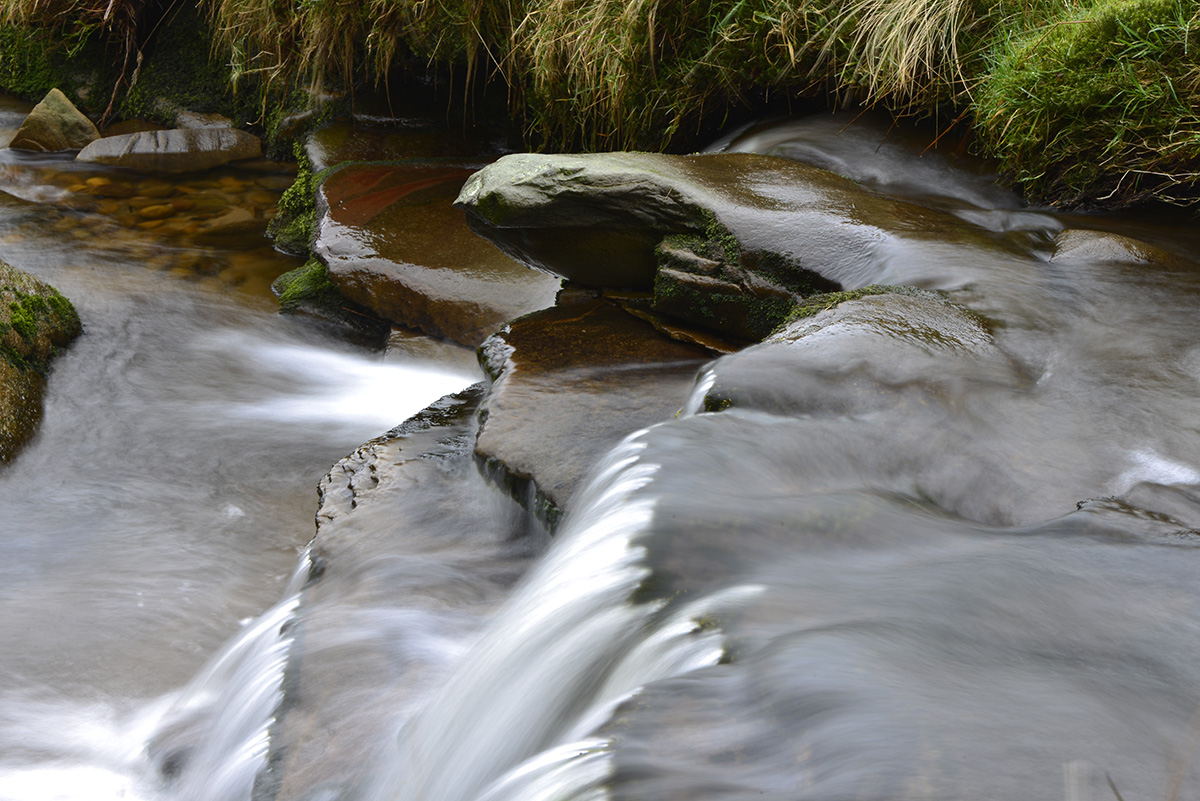
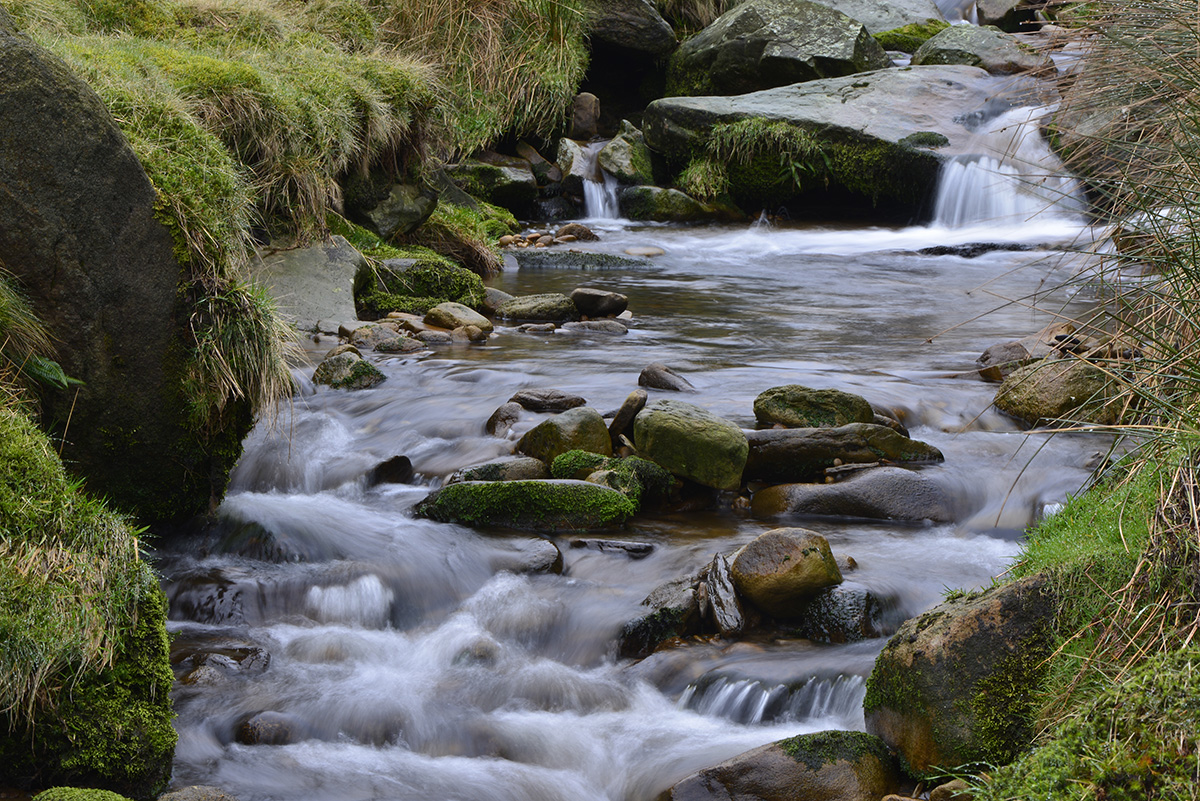
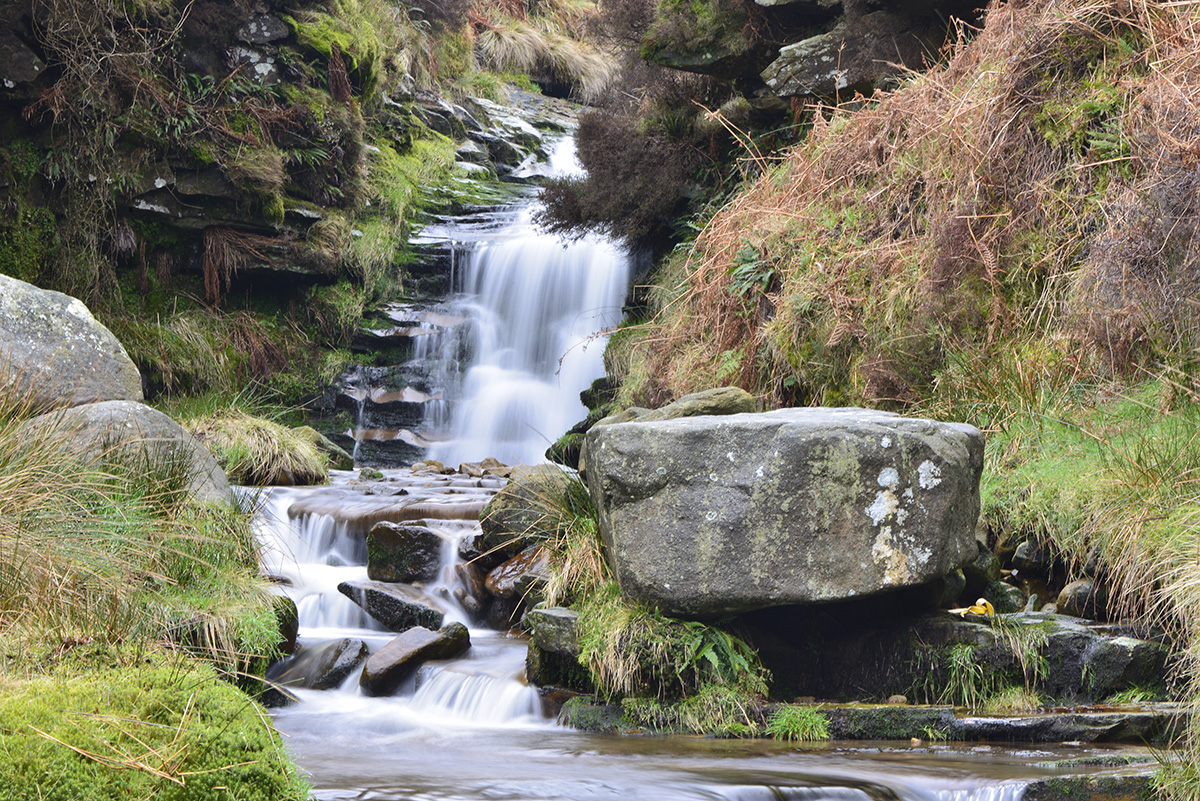
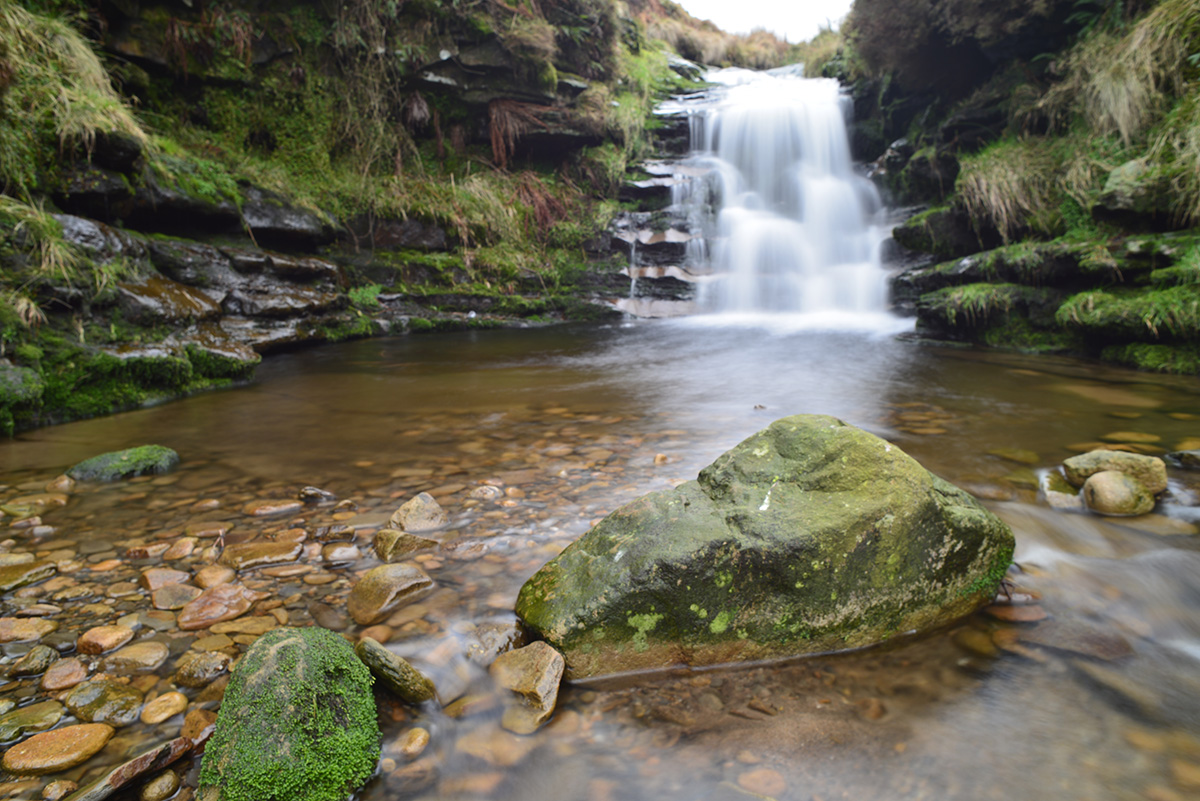
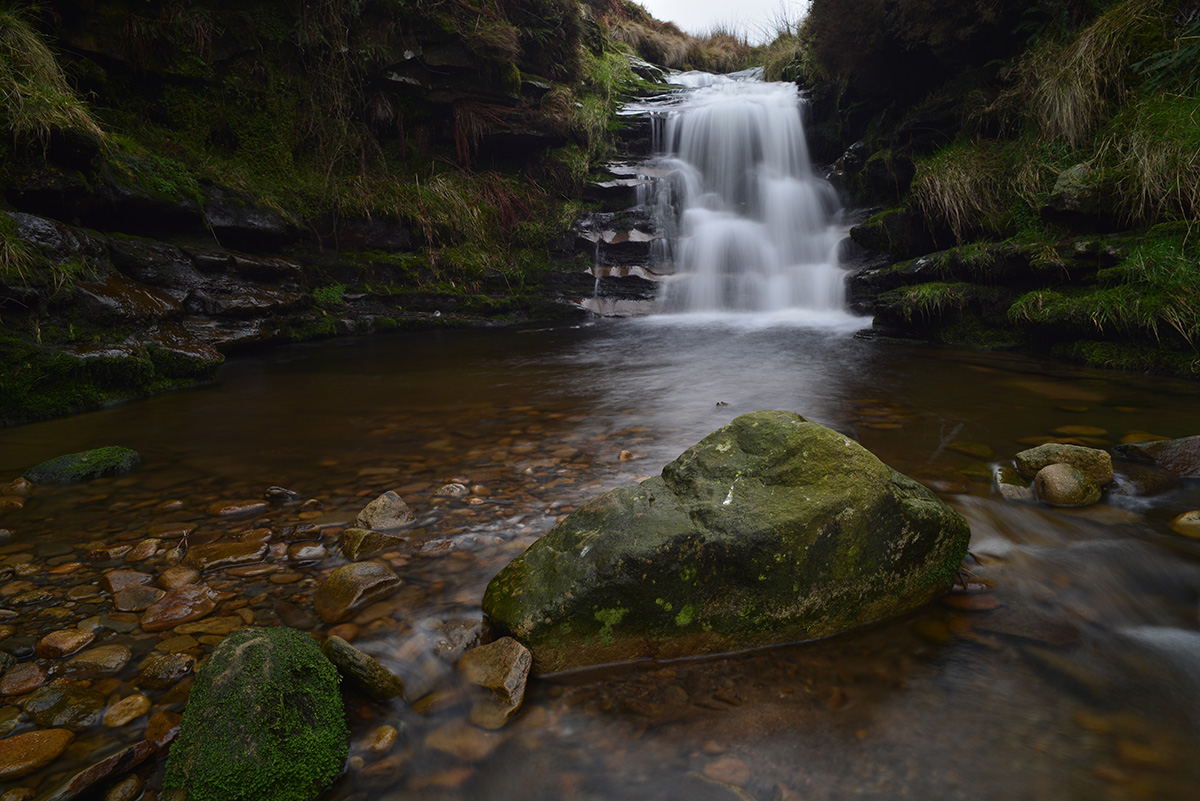
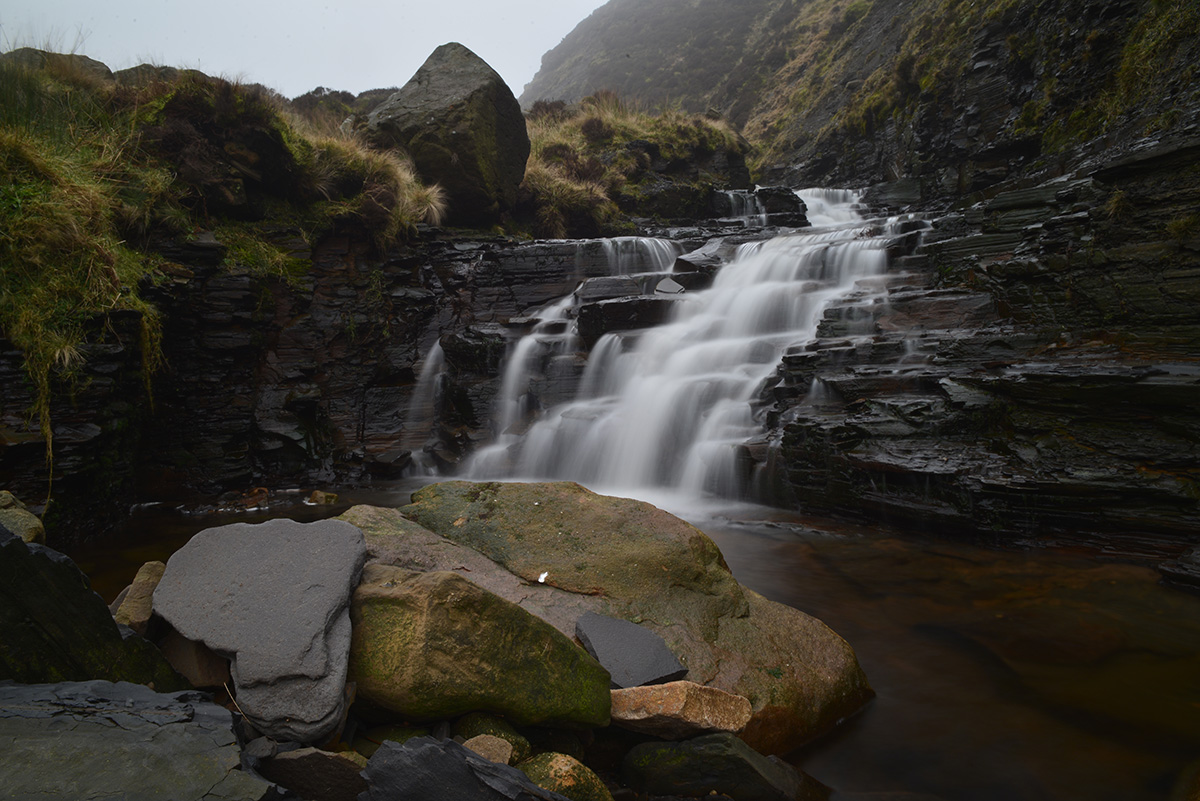
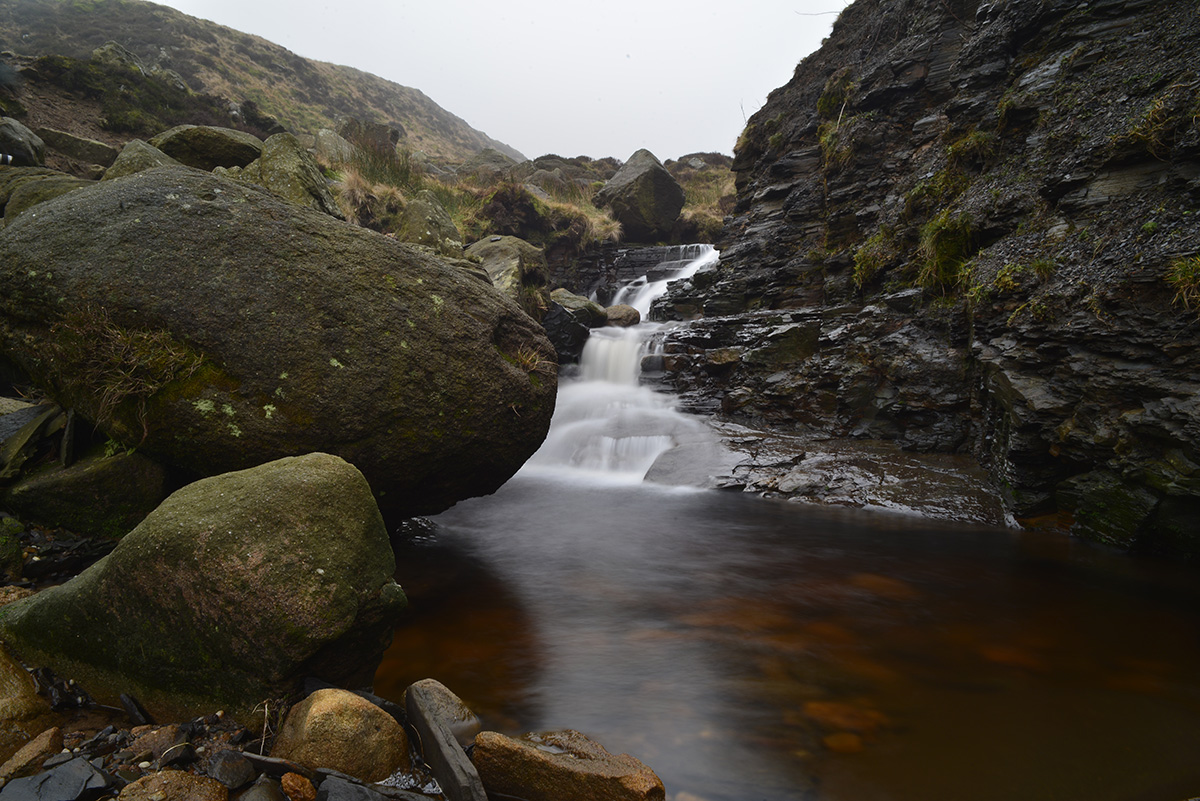
In this initial series I was looking to explore the motion in the water, I did this by using a neutral density filter and a slow shutter speed. To do this I used a slow shutter speed and a tripod, causing the water to blur and the landscape to remain stationary.
The images show the landscape as static – as we would expect to see it, while the water is fogged and blurred from its movement. What is interesting here is that there is no definitive way of recording the water, here the shutter speeds are all around 1-4seconds, but what is the correct objective way to photograph water? Is 1/250 correct which would capture the scene still, or would 1/15 create something more akin to what the eye sees?
Where I feel these images lack is the relation to time and duration as I wanted to explore it. The images certainly show the stillness and movement within the image, but how does this convey movement to the viewer? I feel that because the images are conventional and we know what the subject is, we do not search for any new content or meaning.
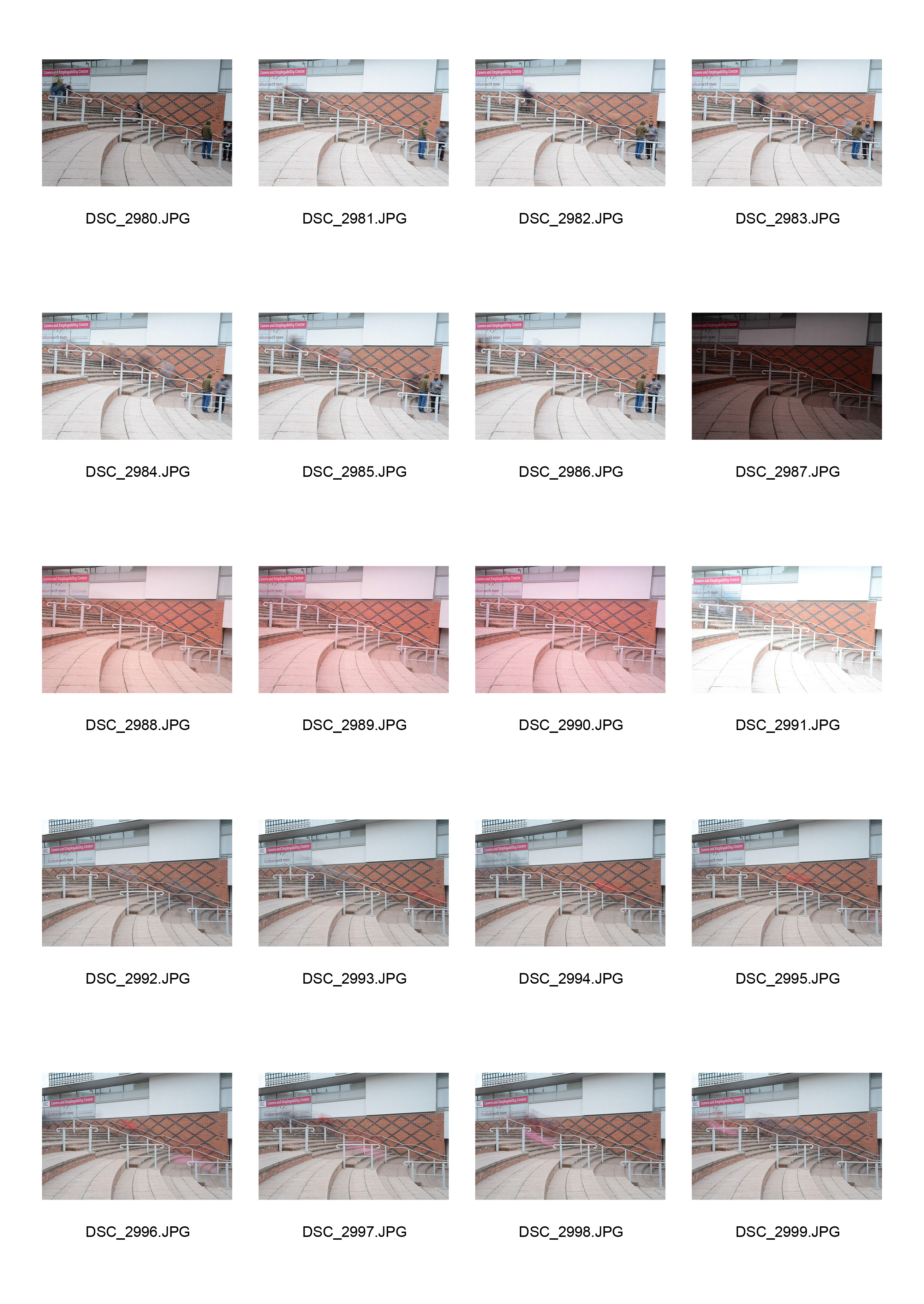
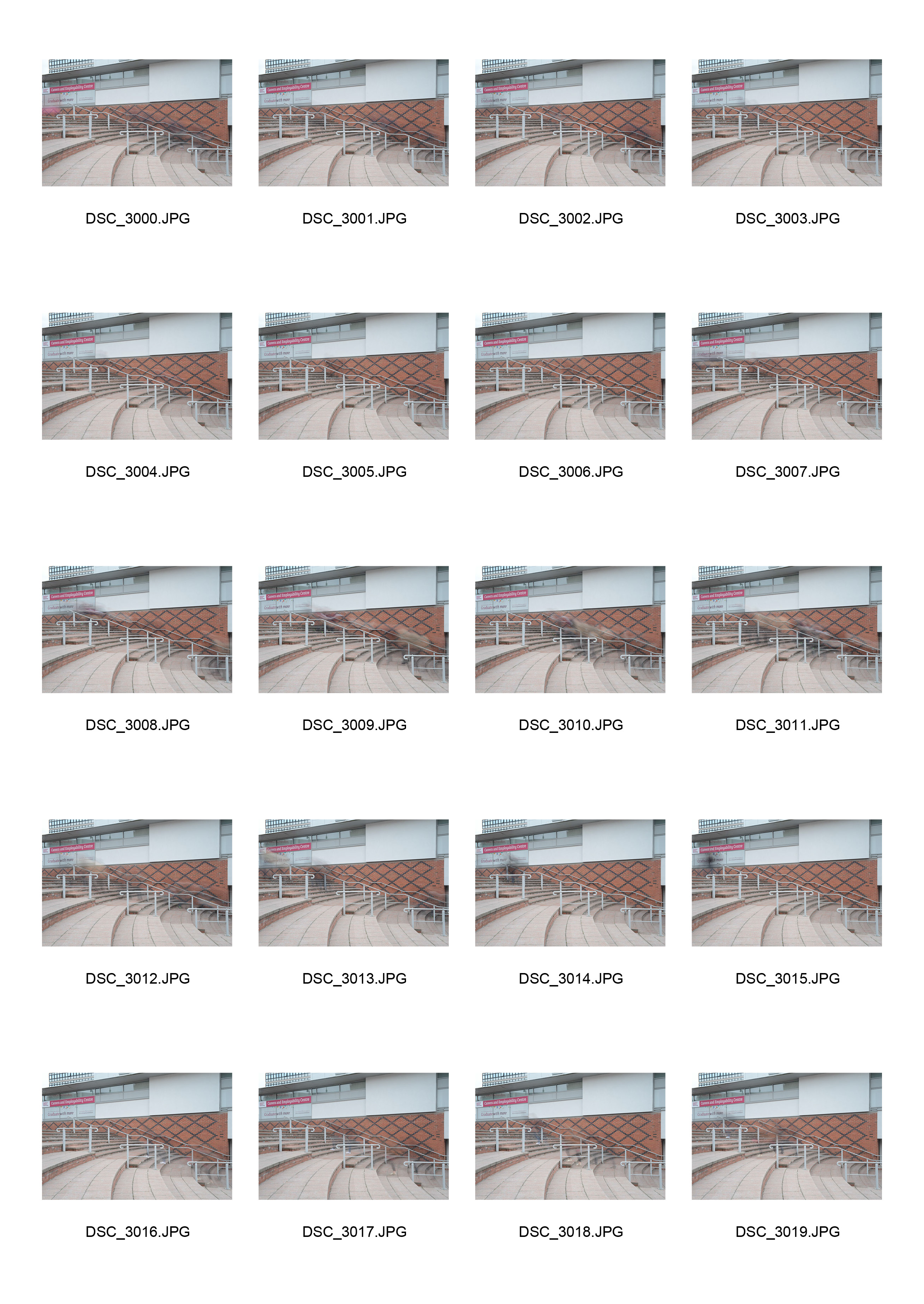
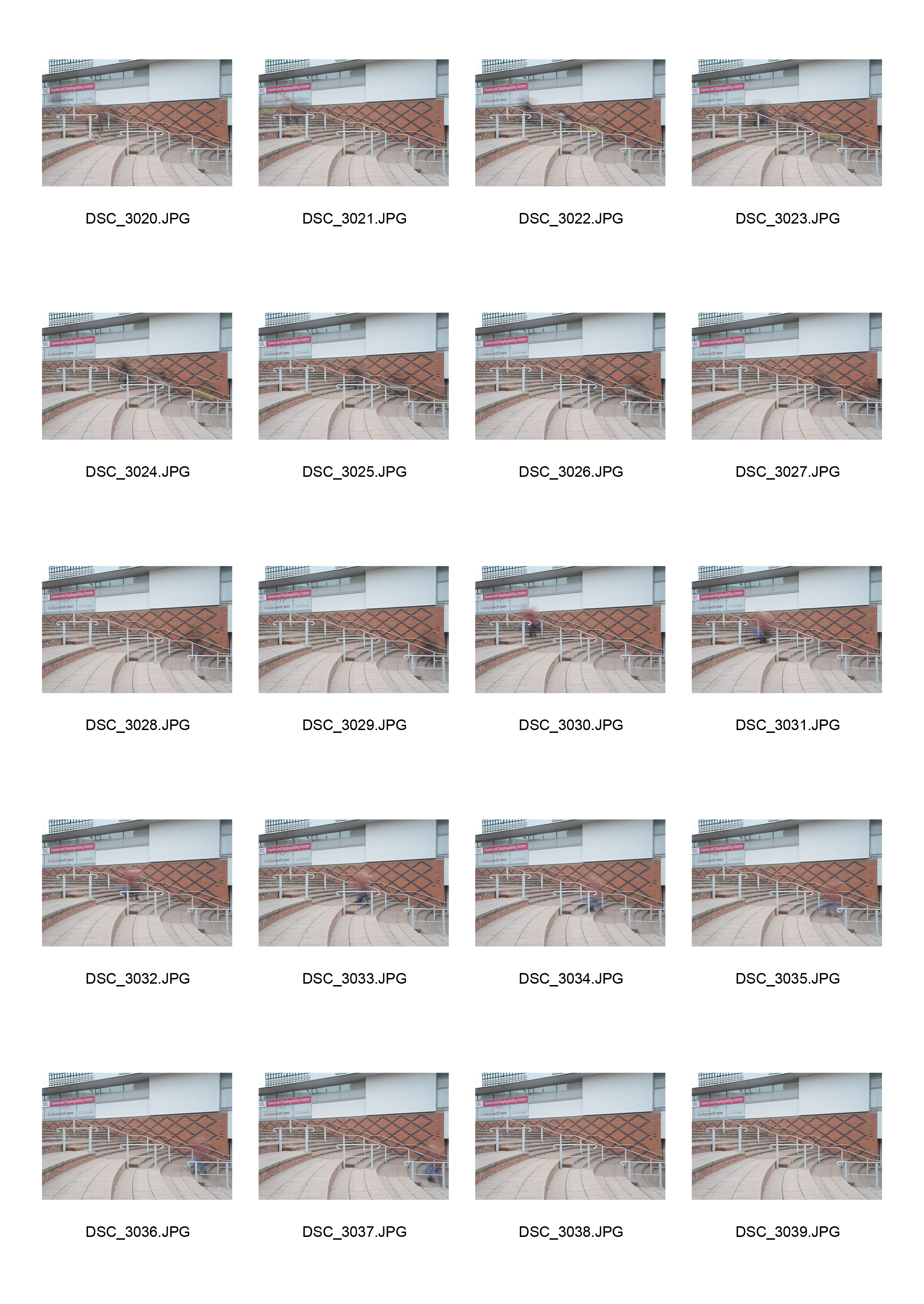
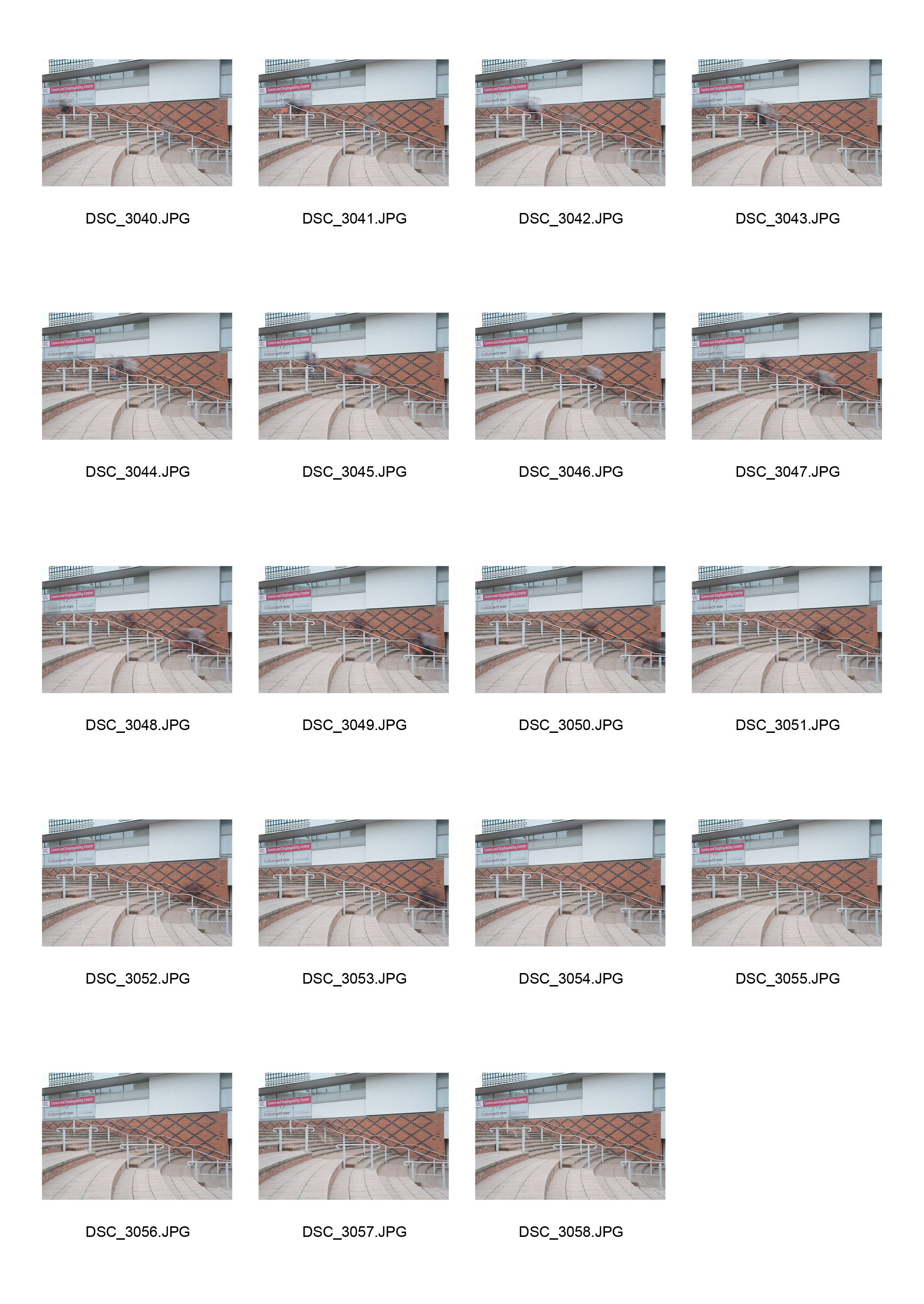
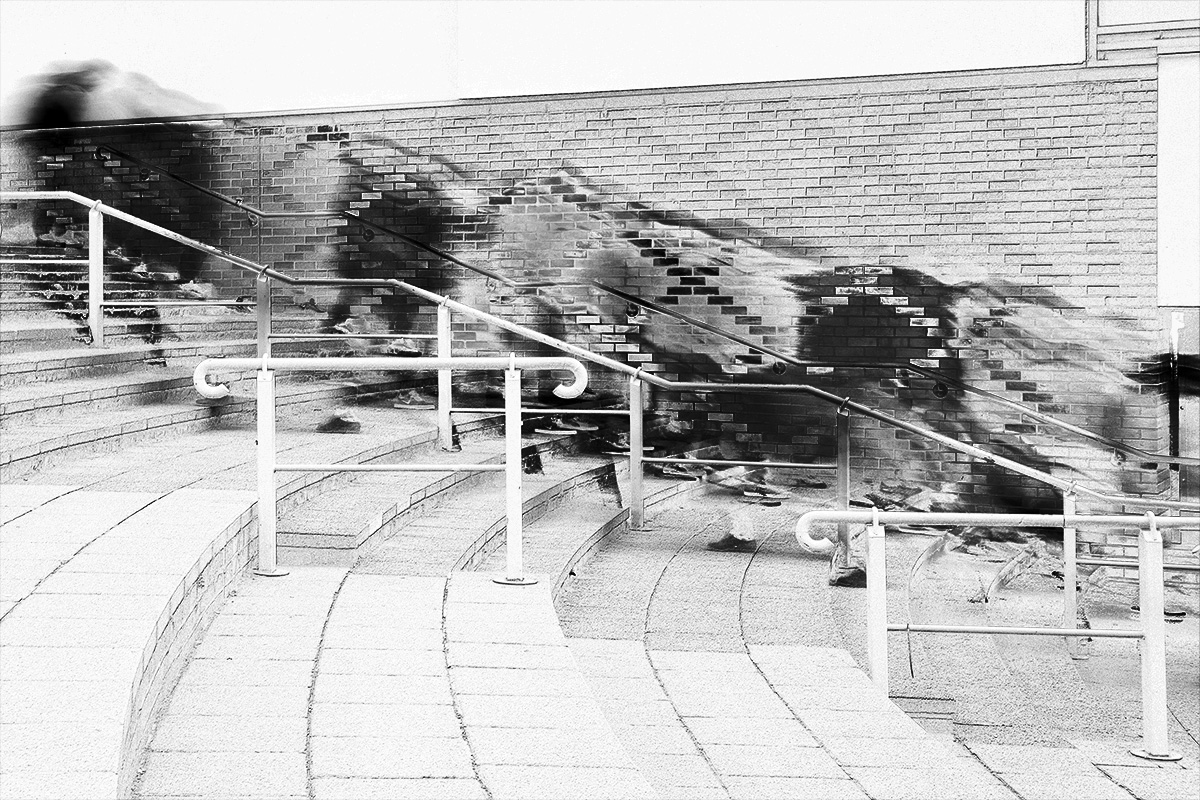
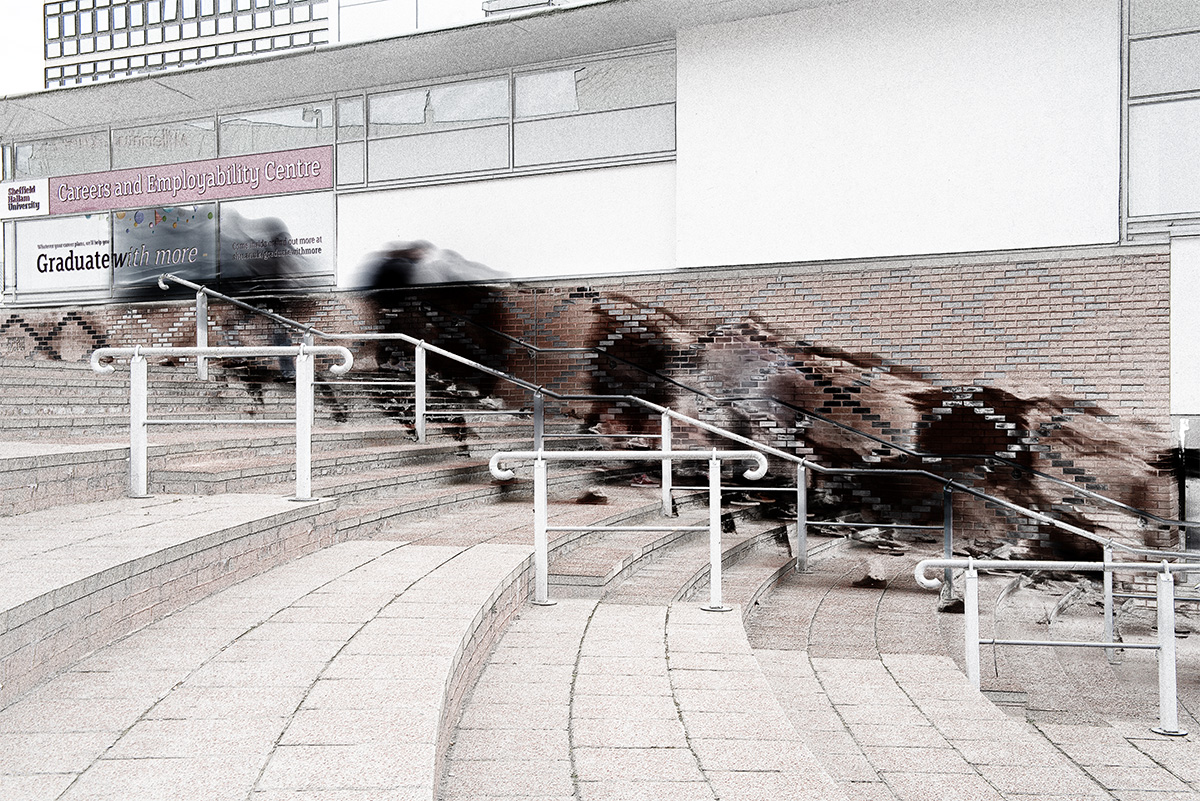
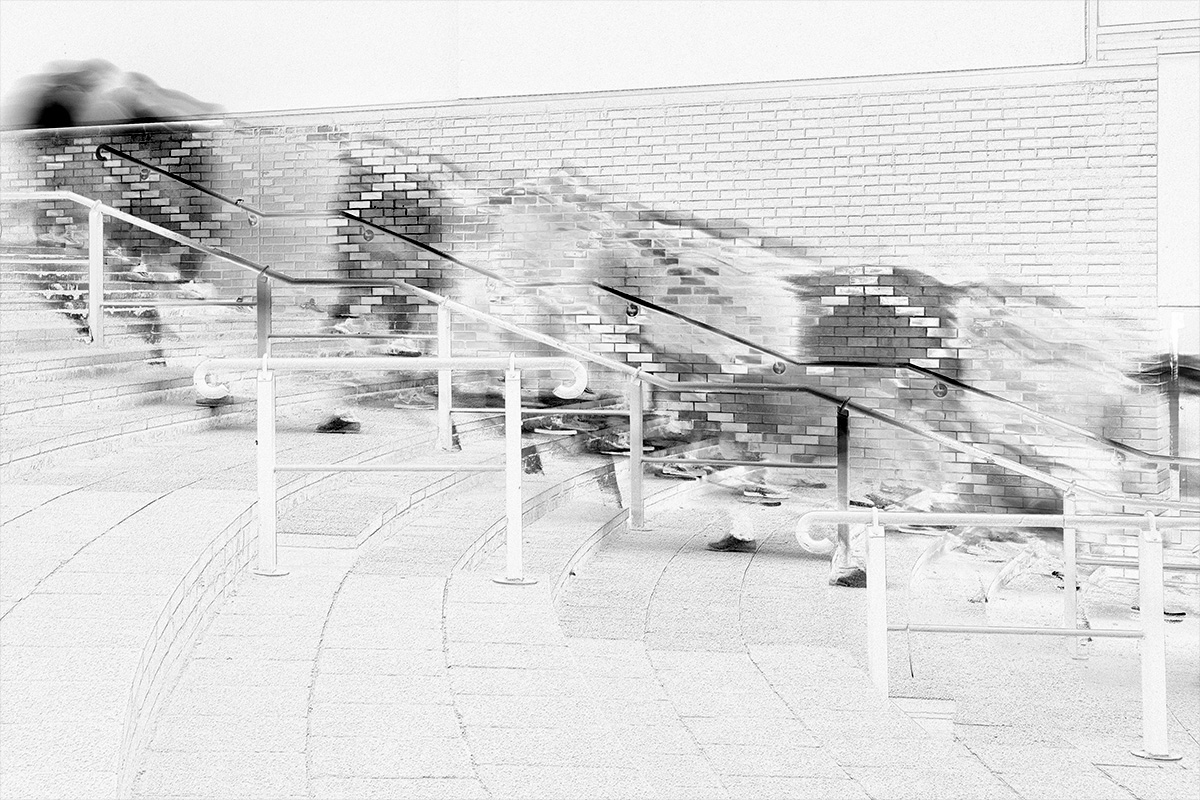
These images show the movement of people up and down the steps, but they are not very organic looking, they do not look believable. Perhaps this subject could be enhanced with film rather than digital, to allow multiple exposures in camera along with the long shutter speeds – which would not create the noise and artifacts digital is associated with.
As a project idea I still feel it is a way off, there is less here about time itself than the movement of people, I do not mind conveying messages about people, but primarily this project is about time and space. I wanted to avoid cliche symbolism like clocks and candles to represent time so I think I will need to continue working on ideas until I can find a more suitable subject, or method of representation.
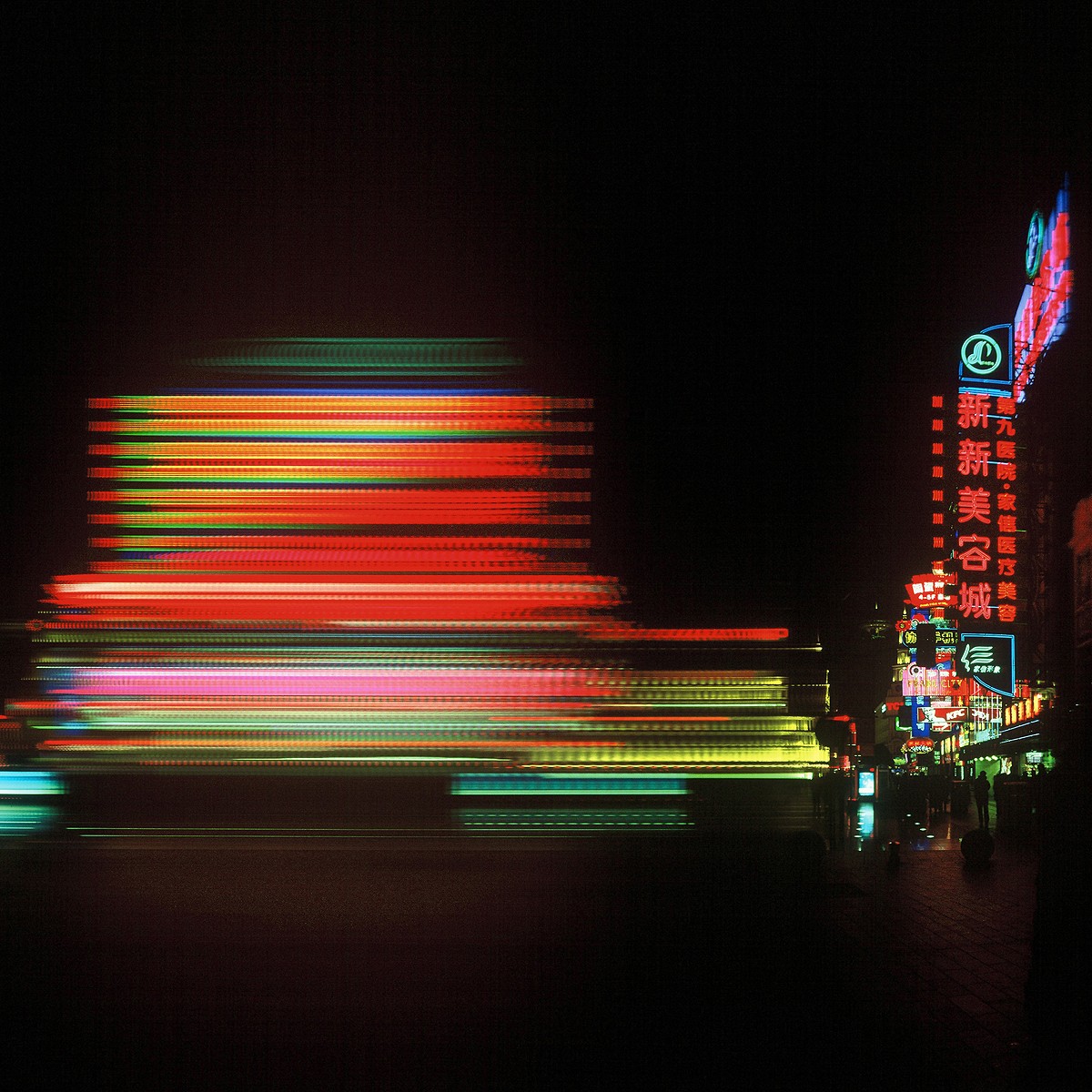
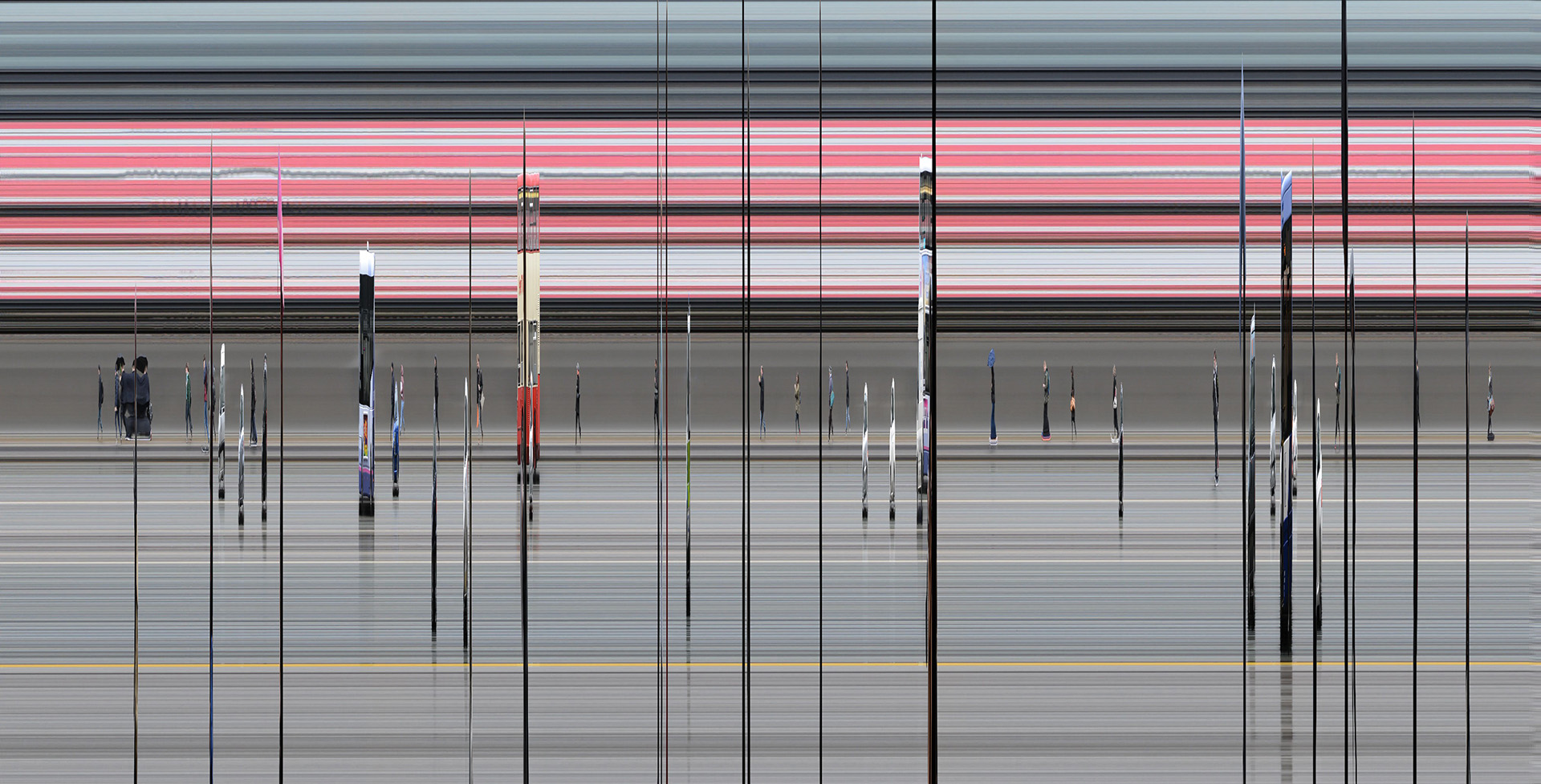
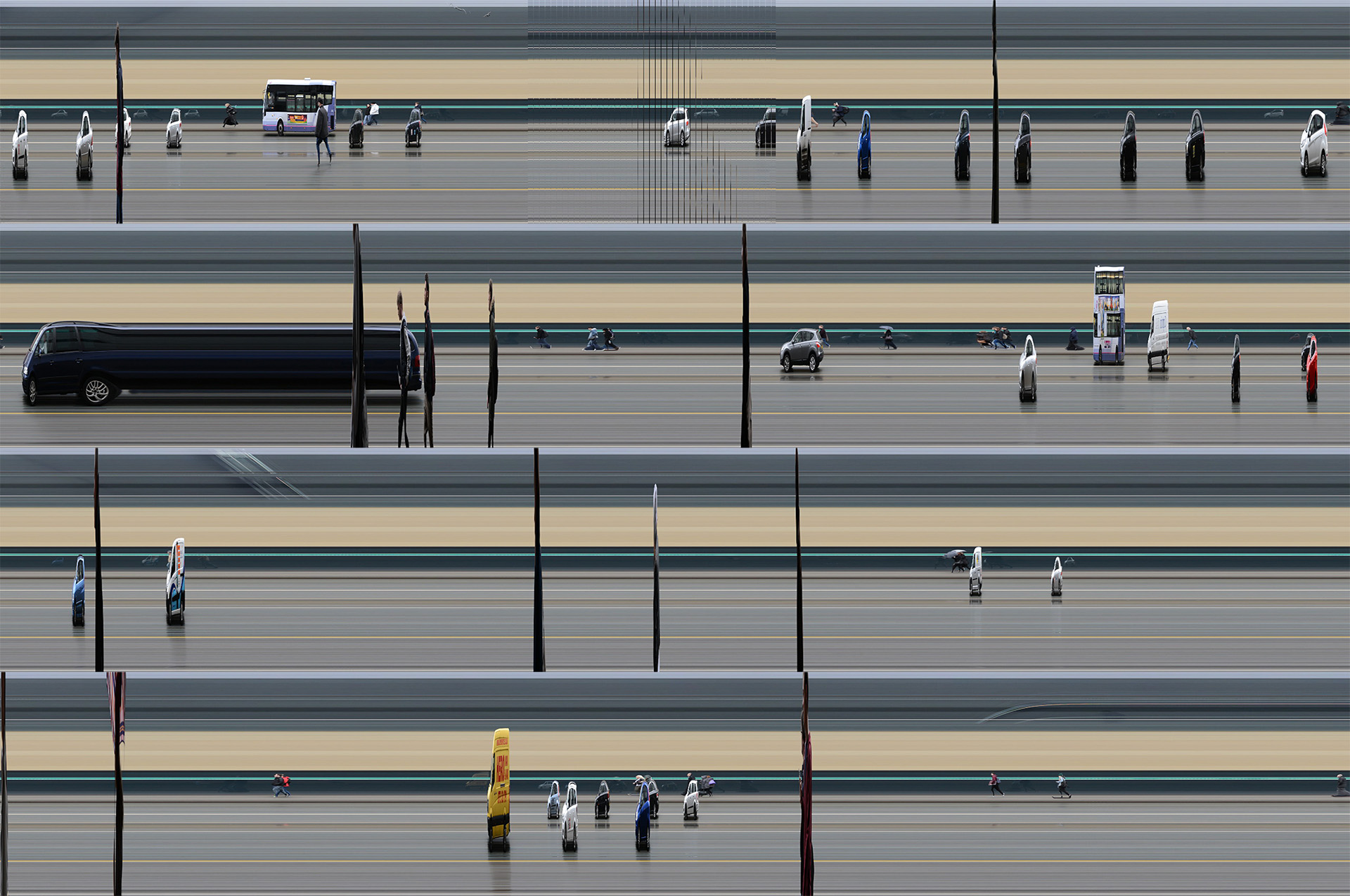
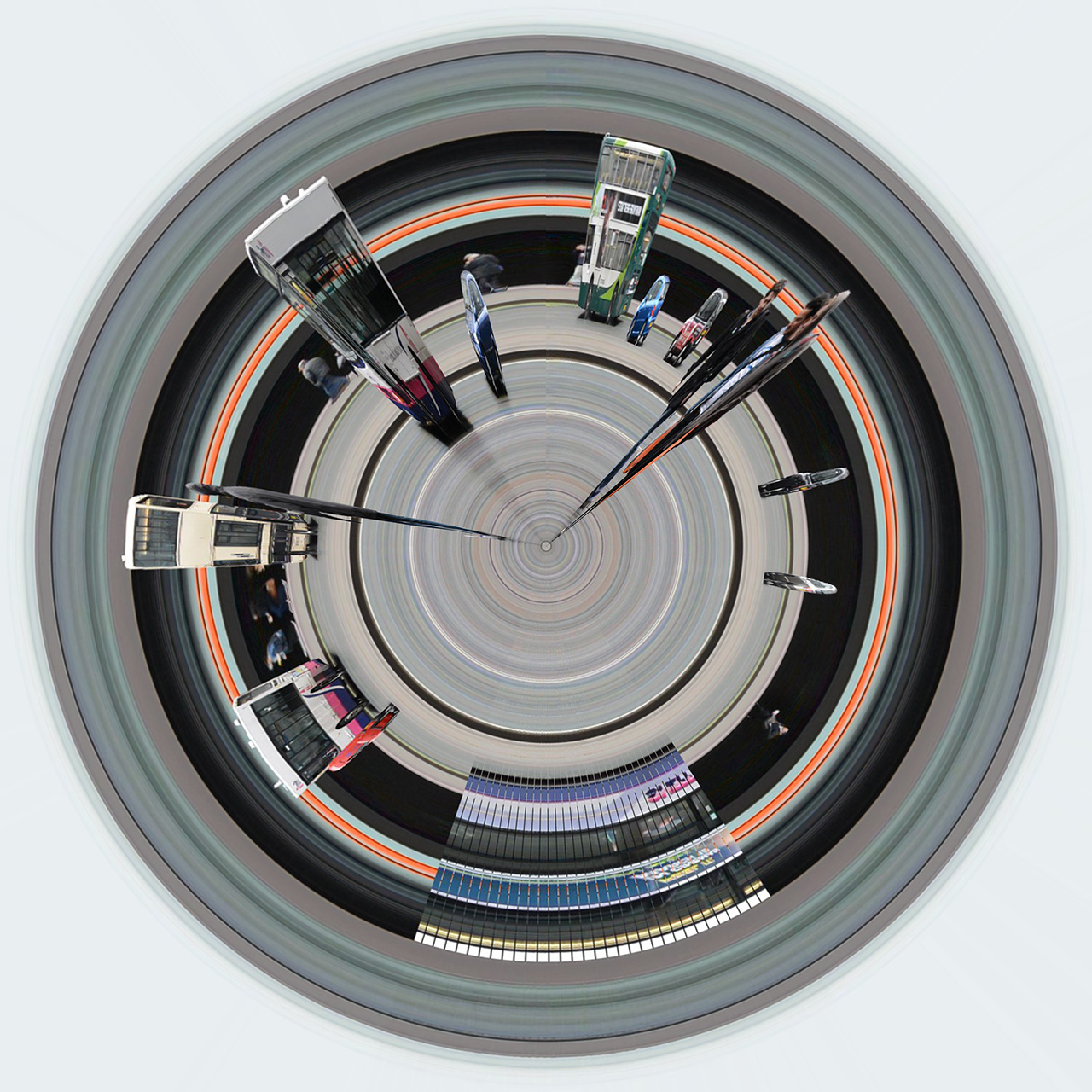
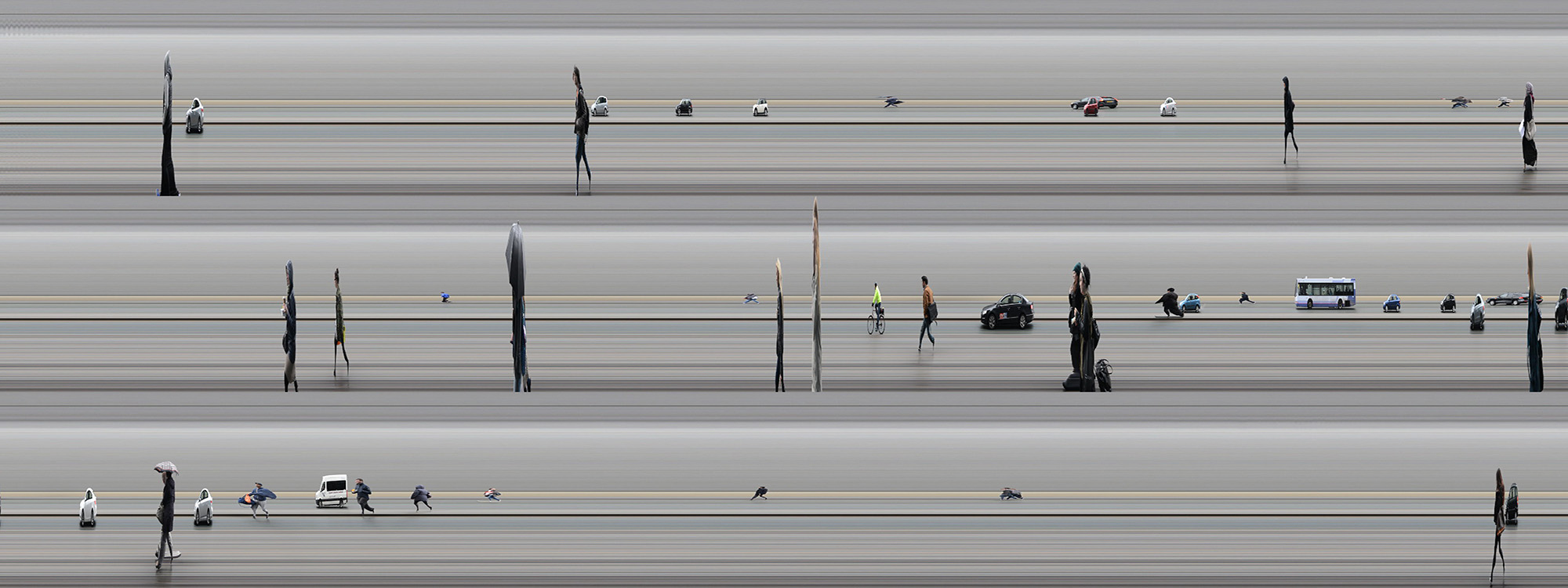
My first experiment with slit scan photography was with traffic and pedestrians. I found a good location and set up the camera in the best way I could. I shot video which was then processed into these still images. After the first few I realised ways to improve upon the quality and efficiency of the process.
The first image – straight from the process. It is very “squashed” because the speed of the traffic is faster than the camera. To make sense of it I need to stretch the information across the screen, into a large, long, panorama.
Here is the image as a panorama, obviously it is now very difficult to view the image, perhaps it could work as a very long print, however I want to look at ways to better display the information.
By chopping the panorama into strips, I can display it as several shorter views, on one page, which is viewable as a normal print or on-screen. I think this works although it is a different type of image now. Perhaps the elements of time and space are lost in this format?
This is a similar scan displayed as a circular panorama. I am not sure of the effect here, it is a common method to display panoramas but does it get across the elements of the image such as time and motion? If anything this makes the image look more gimmicky, something I do not want.
Finally I chopped my last video into small strips and displayed them like this so they can be easily viewed. I think of all the methods I have tried this is the one which is most succesful, although I am not sure if it would be better to just display the data as one line, perhaps a panorama, but one which can be viewed on-screen. This way the image is read as a continuous line of events rather than a picture. As a line it will convey the timeline of events more appropriately.
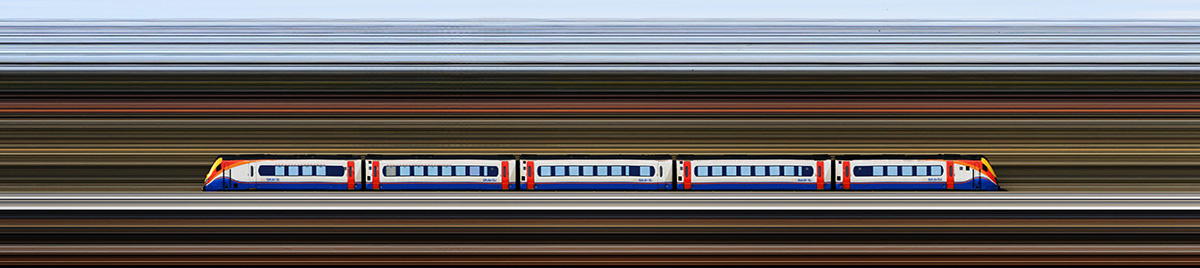
For my next subject I decided to focus on trains. They move at a constant speed, and fairly slowly in the station. Because they are quite long they are easy to caputure across a panorama, compared to buses and cars which move too quickly and are hard to capture without other traffic and people interfering with them. We assosiate trains with speed, so they make sense to me in a conceptual way too.
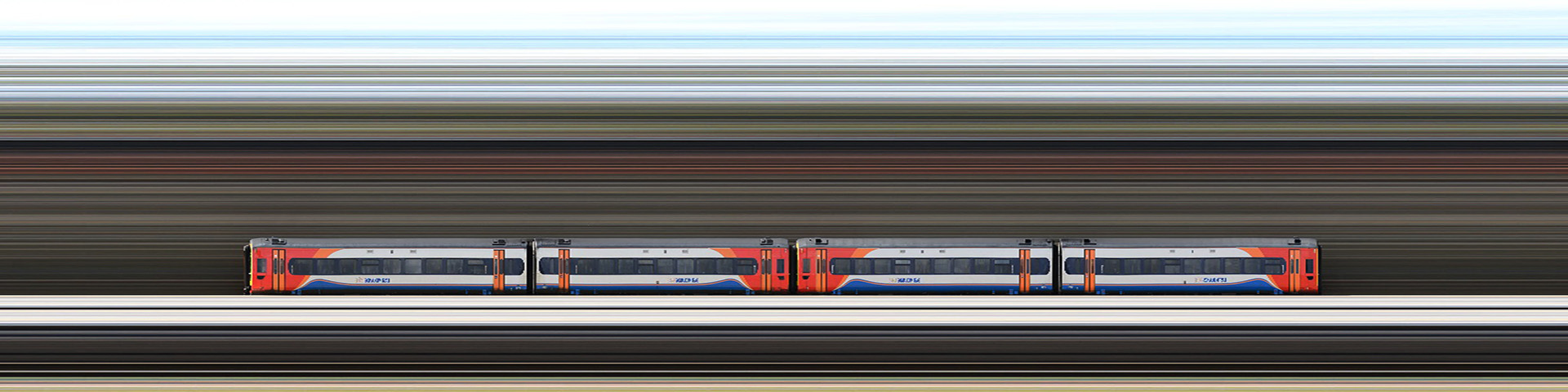
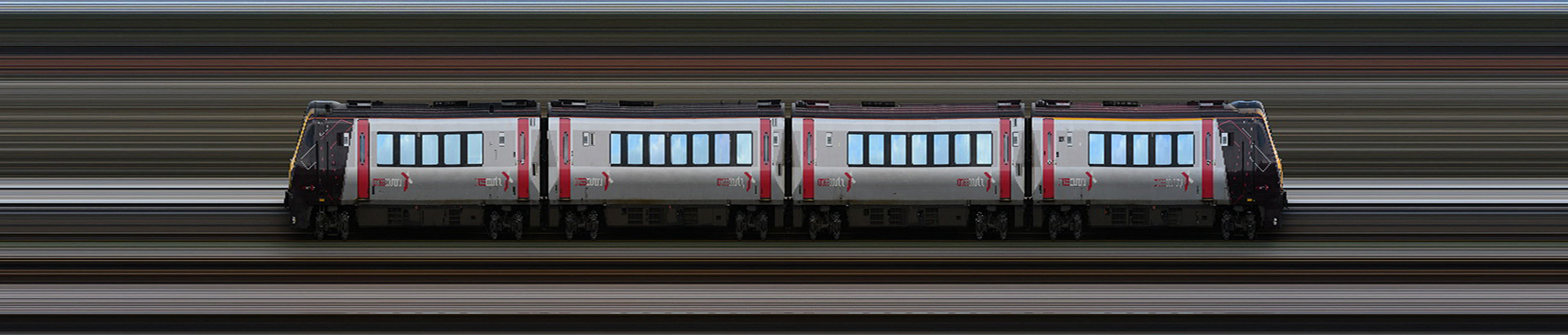
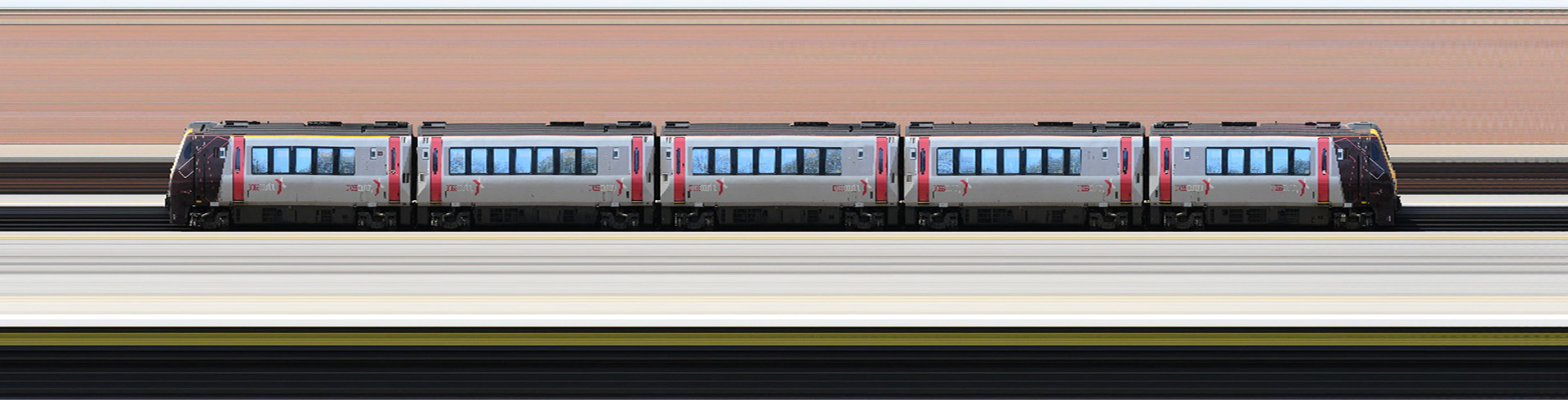
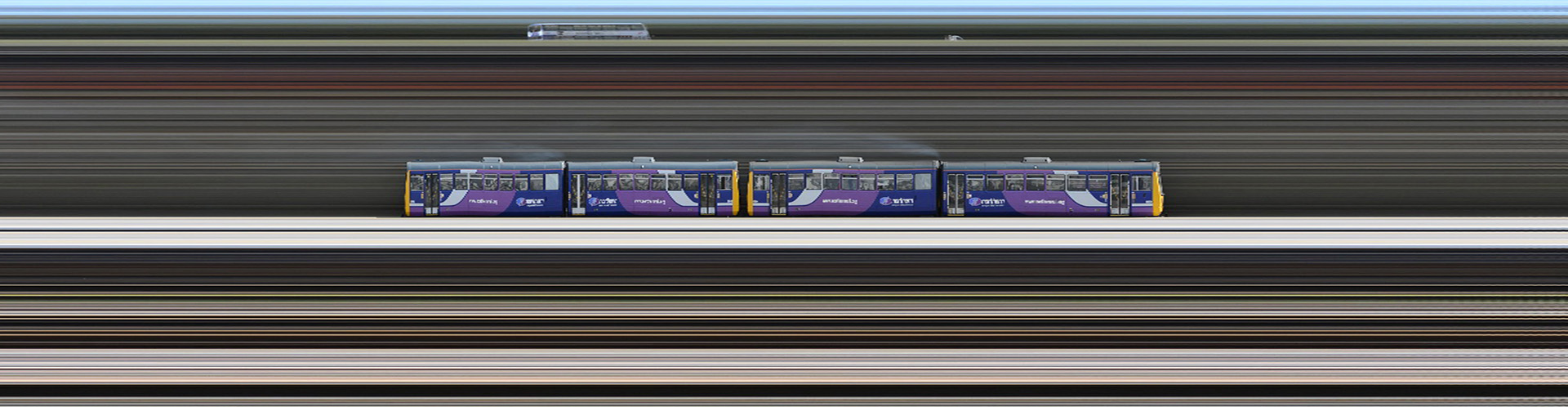
Each image is different, but effectively shows both the train entirely and one pixels width of the background, giving a simulation of motion. The image does not actually show space, it shows time, the time from just before the train entered the frame, until just after the train left the frame. This is hard to concieve mentally, but the train was NEVER in the frame as it is seen here. In a similar way to Bergson explained though, we do not percieve time as duration here, but space – it is the only way we can visualise the element of time in the image.
I processed this footage, not having a full understanding of what I was doing, or what I would achieve. The shoot for this video was intended to be stills, so while others have told me it is effective, I feel it is unfinished, the results are not as clean as I would like. If I continue down this route I will need to create more video footage which is deisgned for this purpose with the technicalities in mind.
Also while working on the traffic images, I discovered a new way in which to view the panorama’s – as videos. This is perculiar because now time is reconciled with the orignal image. By setting the camera and video to the correct frame rates I can actually replay time – just as the camera saw it. I may attempt this in future
I feel this becomes very effective when converted to video. The train is now effectively moving in time, yet it is also fixed in space, yet the space around it moves. It is still, yet moving. Apart from the small tears in the video at the end I think this is close to what I wish to produce for my final work, however, I have some other ideas I wish to polish first and a few more to shoot that I have not yet attempted. This work appeals to me because it embodies everything which I wanted to achieve in my imagery – stillness, movement, the photographic, the cinematic – it crosses mediums and genres, it is more than one at once.
I was given the idea to shoot wind turbines, as they could be an interesting subject which may demonstrate the technique well. I agreed with the idea but wanted to test the concept before shooting footage to process. I took footage from YouTube and then looped it quickly, processing the resulting footage (hence the occasional jumps in the video). I liked the result so I think I will clean it up with a better version using cleaner footage.
I have looked at the work of Sugimoto before but wanted to draw upon this series, which is taken inside a cinema. I like the work becuase it draws upon both the still and moving image, and uses one to capture the other. I think this is a great way to interact with the medium itself, which is something that has interested me for a long time – photography which explores photography. I am not going to go into depth with analysis of this image, but there are some great commantaries written in both The Crystal Image of Time and Stillness and Time
I sourced more effective footage for a second turbine video. Here the effect is much more pronounced and more vivid, somewhat surreal and trippy. I am not sure that it demonstrates my theories of time and duration as well as some of the other work I have produced, but I still like what I have created. I can see me working on this some more, but not for this project. I want to demostrate the qualities of time and space in my work, and I do not feel that this image really gives the idea that I want to convey in my work.
A Solargraph is a photograph which is taken on a very long exposure, generally in a pinhole camera. The result is that the image takes on the surroundings, but the sun streaks across the sky multiple different times – showing a trace of its path. The resulting image is then fixed but not developed – as it is already well developed from the extreme amounts of light it has recieved. The process is often carried out over six months to a year and sits somewhere between art and science, while it might not be directly related to my project, I feel it is a key area of photography related to time and duration, and wanted to mention it here – it is unusual to see a photograph which shows us a period so long.
Bergson’s theory was incredibly difficult to read, let alone understand and analyse what it was that he was getting across, so I was grateful to find this book, which contains essays discussing Bergson’s theories in a more accessible format. It was of great relief to find this;
The task of thinking real time – durée – is fundamental to Bergson. This is difficult however, because the structure of the human intellect has evolved to work in homogeneous space, a form of thinking that is incapable of representing the continuous change that is duration’s very essence. Bergson’s deduction of durée thus begins negatively. To obtain an intuition of duration, all forms of spatial symbolism must be put out of play. (p301)
This is fitting with my previous analysis – essentially we cannot, as humans, easily separate time and space in order to perceive it, our measure of time is often based on space, for example, we count days and hours not in time, but in the movement of the sun, the more it is examined the more abstract the concept of time becomes.
Here is some of the code that I had to use to process the videos into stills, scan them, and then convert them back into video again. I think that the code itself has a part in my work, and I am considering it being part of the work itself, showing directly how technology interacts with the world in which we live, or at very least that algorithms can be a functioning part of an art piece.
void processFrame() {
if (direction == 'x') {
int maxX = min(saveCount+batchSize, inputWidth);
for (int x=saveCount; x
I then converted this code into a scrolling screen, emulating a computer console, I could have gone further with the animation, perhaps made it closer to a real console screen, however I just wanted to play with displaying the code as part of the work itself. The video is a minute long (the same time that is optimal to produce the slitscan vehicle videos) and can be looped easily - so that it can be displayed in the exhibtion space if I choose to include it as the artwork itself.
In this video I have created a self portrait using my current video techniques.
I think I have created something really interesting, but I am starting to move away from my original ideas about time and space, this is more to do with the body and the self, perhaps reality. I like the work and realise it has some strong qualities which I could develop, however I will save it for another project, where I can fully explore the reasons for a piece of work like this.
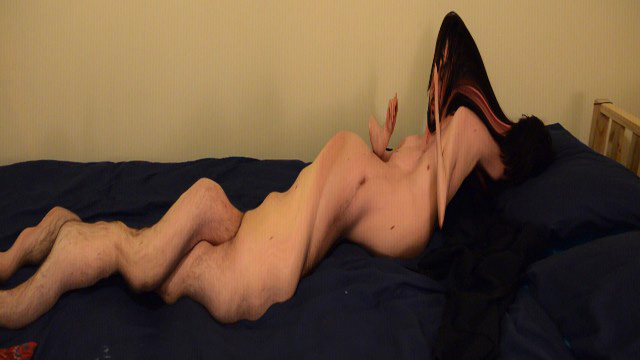
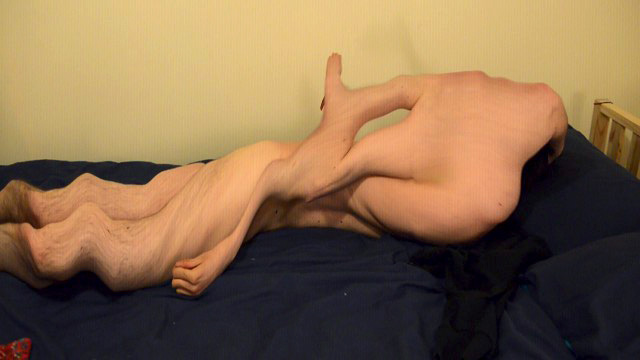
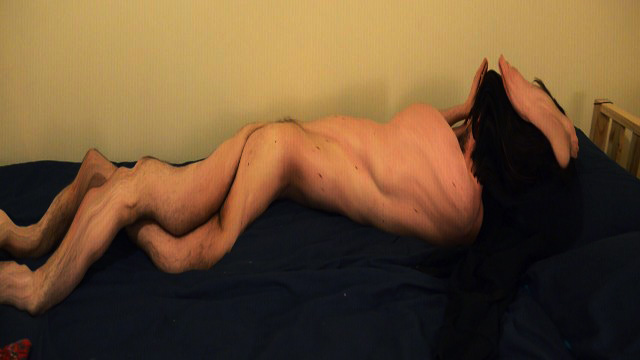
I decided to experiment one last time with the body before deciding which route to take with my work. These stills are from a full video which I have decided not to post here. The technique twists and controts the body, it makes me think of the work of Anna Mendieta, it would be really useful for work which challenges the body, the human form, our self loathing and similar things. It changes the body into unregonisable and impossible shapes, which could be seen as referencing the handicapped or other worldly beings. It is in a interesting fork of the work, but I will not be refining it further for this project, which I wish to focus on space and time.
After taking images of trains I was pretty sure that I could take any moving vehicle out of its environment in a similar way. I have shown here the example of a fire engine. The work is visually not as strong as the trains and perhaps has less meaning of speed – trains look fast – while the emergency services bring connotations to the work which are not relevant to this project.
Here I have done the same thing, only with a person. I feel this could have real potential for conceptual work. It works as it takes the person out of space and time, however, it is extremely challenging from a technical perspective, to create this video took over an hour of my time, plus additional rendering and required me to use four different pieces of software, still the quality is low – look at the jagged lines – I do not feel I could present something like this as to me, it is unfinished, but this could certainly be a future development of the work.
Knowing the quality wasn’t where I wanted it to be I produced this video. It took an extra hour to run through another program to add extra frames into the video. It is of lower resolution and has some strange artifacts, but it proves that the quality can be improved. I would run all my videos through this program, but it would take around a day to process each one then, and I would still have to clean up the artifacts. It is interesting to see there are more options to continually refine the artwork in the digital age – nothing can be the final piece as there are always improvements to technology.
In this video I have gone back to some of my older footage, managing to present it in the most interesting way yet. This footage interests me because it mimics the actual technique used in factories to check components and products passing down a conveyor belt and applies this to real life. There is so much more I could do with this technique in terms of locations and footage, but I am happy to have explored it here. The people in the image move, however they are trapped in the continuous motion of the conveyor belt, unable to escape their fate of passing through the screen. There is symbolism mortality and the futile nature of life, as well as the mechanical age and mass production all at work in this video, with time I could play these themes out in a larger series or a longer piece.
I went back to the trains with a more developed shooting technique, allowing me to achieve much better footage, which in turn I hoped would produce stronger images and videos.
Here I have some images, not all are quite the correct dimensions, but I can iron out the creases at a later point. For me, looking at these images was merely a ‘preview’ of the videos which I could then generate. (A still takes around 10 minutes to produce, a video takes over an hour)
I am happy with what I have accomplished here, each image shows the entire time span in which the train was visible in front of the camera, plus a few extra seconds before and after. The train however, appears to be stationary – it is not – it is moving. The images embody everything that I wanted to capture in the work, they distort time and space, and show our limitations of counting time as space. Duration here, does exist, but we do not realise it, because we are not trained to see it. I will process the videos and begin to finalize my work from this, looking back over the theory I have read to help understand the key themes in my work and explain them in the language that is used by theorists.
I have converted the latest train footage to video and will be using them as final pieces. Initially I had six to work with, however, one has a bus travelling through the scene which detracts from the ideas I am conveying and is generally distracting and a second piece of footage got encoded rather badly (its possible that I am straining the limits of the hardware now as I run out of computer resourses to complete the project – each video takes around 30GB of hard drive space). The remaining four all work successfully, and I am considering choosing three to present as final pieces. I do not think I will use the code anymore as it does not add much to the work – only explains that it is referencing the computer – which could easily be explained in a short statement, or with a printout of the code.
I like the silence of the work, but I am considering the effects that some music may have on the piece, I have watched the videos with a few different pieces of music playing, so far the most successful was this;
https://www.youtube.com/watch?v=7z2GLyrKs4E
Around 10 minutes in is my favourite piece for my work, the music was a soundtrack for a film called octane, a thriller which takes place on the road, so the connection to speed and travel is quite relevant.
To display the work I would present it in a large gallery space, with three projections running at once, each looped seemlessly (probably by reversing the video and then looping when it got to the start again. This would mean that the viewer got an overwhelming sense of the speed being portrayed, but could see there was never any movement, the pieces would eternily be trapped in space and time. A short statement would explain the work and the motivations behind it.
For a title I have chosen station.ARY
There are several reasons behind this;
I had some ideas around movement, time and space, however I did not feel these would convey my ideas. The word stationary however, describes what is happening in the piece – the train is static. I did consider something else, like moving still or still moving but prefered to go down the stationary route. From there I realised that they were shot in a train station, so the word station would also be relevant. To reference the computer code used to generate the piece I decided then to change the word from stationary to station.ary – referencing the three letter file formats that we are used to on computers.
My work is an exploration of space and time, as recorded by the camera. The use of technology can disrupt both space and time in ways we cannot percieve, allowing us to see things as we have never done before. Whether these new ways of seeing are any more or less true than what we traditionally see in photography is not easy to define, as the camera in its choice of shutter speeds and apertures is much more subjective in its approach than we would initially believe.
While photography shows only a record of a discrete moment from the past, I have intervened in this process with the use of, showing thousands of discrete moments from the past in one singular frame. Building these frames into short animations, my work sits in a realm between the still and moving image, somewhere between photography and film. It is time that is depicted in each frame, yet we percieve only the physical space of the train – as Bergson explains, as humans we often rely on counting time as space to simplify its concept and make it more tangible; my work emphasises this, and allows us to view time as space.







.jpg)
.jpg)